Roofs provide the first line of defense against the elements: the glaring sun, pouring rain, heavy snowfall, and high winds—your roof takes it all. That’s why making the right choice matters when considering your roof replacement options.
While asphalt shingles are popular, they aren’t necessarily the most durable. Another, increasingly popular roofing material these days is metal roofing, which offers a variety of options for homeowners. What is the metal roof vs shingles life expectancy? What are the other key differences between the two materials?
This article will discuss metal and asphalt shingle roofing, breaking down their life expectancy and differences, and provide another option to consider.
What is Metal Roofing?
Metal roofing is a relatively broad term covering various metals and styles. While these roofs started as a predominantly industrial option, they have become increasingly popular in residential areas due to their durability and more modern aesthetic.
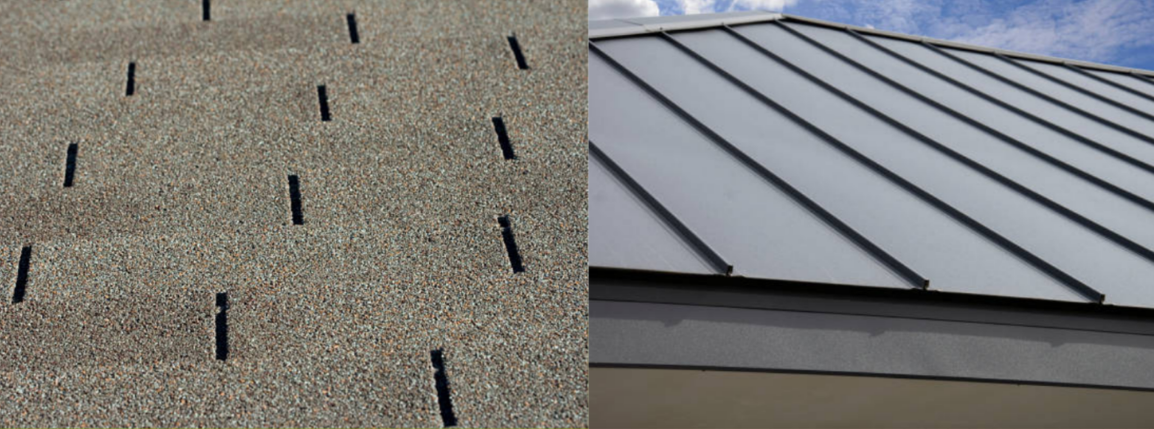
You can get metal roofing in various types of metal, with popular options being aluminum, steel, and copper. Metal roofs can be done as panels in a standing seam or corrugated style, or be cut into shingles for a more classic look. They can also be designed to resemble materials like barrel tiles, slate, and wood shakes. Overall, metal roofing has a higher initial cost, but offers a longer lifespan of about 40 to 70 years, if not longer, depending on the type of metal.
What is Asphalt Roofing?
Asphalt shingles are the most common roofing material due to their affordability. They all generally have the same composition: a fiberglass base coated in a layer of asphalt and finished with a layer of ceramic granules, but there are three different types. The three main types of asphalt shingles are 3-Tab, Architectural (Dimensional), and Luxury (Designer), each offering slightly better quality, durability, and aesthetics.
Basic 3-tab shingles are the most affordable option and offer the shortest lifespan, about 20 years. Architectural shingles come next, offering a slightly higher price point, lasting about 22-25 years. Finally, there are Luxury asphalt shingles, which offer the highest price point and lifespans of 30 years or more.
Key Differences Between Metal and Asphalt Roofing
Aside from the difference in metal roof vs shingles life expectancy, several other key differences should be considered when comparing these two materials.

Durability
Metal: Metal roofs are highly weather-resistant, withstanding snow, wind, and hail with a Class 4 impact rating, though some metals are more prone to denting than others. Metal roofing also boasts a Class A fire rating. On the downside, they can be prone to rusting, which can shorten the roof’s lifespan and affect the overall durability,
Asphalt: Asphalt shingles are significantly less durable than metal roofs. While they are Class A fire resistant, they are not as weather resistant and can degrade more quickly when exposed to extreme conditions and high winds. Most brands use stain-resistant technology, which helps protect shingles from algae and other growths that can cause damage.
Installation
Metal: Metal roofing has a more complex installation process, which takes longer and requires a specially trained professional. Options like standing seam and corrugated are also more difficult due to the size and weight of the panels, and they can have sharp edges that require more precautions. This makes metal roofing more expensive to install than other roofing materials.
Asphalt: Asphalt shingles are the easiest roofing material to install, requiring no specialized skills or instructions. Any licensed roofer or even a skilled DIYer can handle the job.
Weather Resistance
Metal: Metal roofing is highly weather resistant. These roofs are built to withstand everything from high winds to fire better. Moisture from rain and snow damage can lead to rusting, but it is less likely to cause the same level of damage as it would with asphalt shingles.
Asphalt: Asphalt shingles do not offer the same level of weather resistance. While designer and luxury asphalt shingles offer greater wind resistance, severe weather can still cause serious damage. This can lead to the need for frequent repairs or earlier replacements.
Maintenance
Metal: Metal roofing is a very low-maintenance option, though you will want to continue working with a licensed metal roof installer for proper maintenance. Overall, it is easier to clean, requires fewer repairs, and only needs an occasional inspection to ensure there is no damage.
Asphalt: Asphalt roofing can become damaged more easily, requiring more frequent inspections and maintenance, though it is all relatively straightforward. Worn and damaged shingles will also have to be replaced as needed to maintain the roof’s integrity.
Cost Over Time
Metal: Metal roofing comes at a higher initial cost than asphalt shingles, but this extra cost is justified when comparing the metal roofs vs shingles life expectancy. Once you install a metal roof, you are set; there will be no need to replace it for 40 to 70 years, possibly even longer. They also require significantly less maintenance than the typical shingle roof. Generally, you’ll only need to inspect it occasionally for signs of rust or other possible damage.
Asphalt: Asphalt roofing has a significantly lower initial cost, as asphalt shingles are affordable, readily available, and easy to install. However, they are prone to damage and need to be repaired more often. With an estimated lifespan of around 15 to 30 years, you’ll also have to replace the shingles more frequently, especially if you live in a more extreme climate, which can lead to the shingles degrading much quicker.
A Different Option to Consider

Choosing the right roofing material makes a big difference, especially when it comes to how long it will last. When comparing metal roof vs. shingle life expectancy, metal roofing is a clear winner, but it isn’t the only option.
Brava Roofing Tile is a brand of synthetic roofing composed of 100% recycled plastics compressed into durable tiles that offer realistic imitations of slate, barrel tile, and cedar shake roofing. Much like metal roofing, Brava’s synthetic tiles are highly durable and a much better alternative to asphalt shingles, with a lifespan of 50 years or more. Key benefits include:
Installation: Brava tiles are much easier to install than metal roofing and require no special tools or training. They are also lightweight, so installation can go relatively quickly with a reputable installer.
Durability: Brava tiles are highly durable, offering a Class 4 impact rating, Class A fire ratings, wind resistance from 188 mph to 211 mph, and UV resistance.
Weather Resistance: The tiles are UV resistant, with Cool Roof options available for hotter climates. They are also freeze-thaw resistant, making them suitable for climates with extreme temperature fluctuations. They are moisture resistant, so snow and rain will not damage them or cause mold, mildew, or algae.
Maintenance: A Brava roof is one of the lowest-maintenance options in roofing. Unlike certain metal roofs, rusting is not a concern; the roof will never rot or grow mold, mildew, or algae. Occasional inspections are still a good idea, but beyond that, the only maintenance necessary is to clean the tiles occasionally with mild detergent and water.
Cost Over Time: Brava tiles will cost more initially, but once they are installed, you won’t have to worry about paying for repairs or costly maintenance requirements, which saves you money.
Making Roof Life Expectancy a Priority
A home’s roof does a lot of heavy lifting when it comes to protection and comfort. Since it takes the harder hit, you want something durable and that offers longevity. Metal roofing is a great option, especially when comparing the metal roof vs. shingle life expectancy rates, but it has its drawbacks: It can be noisy, it can rust, and it isn’t a material that fits everyone’s aesthetic.
Brava offers an even better alternative, with beautiful, aesthetically pleasing styles that work well with various home styles. Beyond the aesthetics, the products are highly durable and offer the desired longevity. Once you replace your old shingles with a Brava roof, you’ll never have to worry about it again.
Contact Brava today to learn more about our roofing products and their benefits.