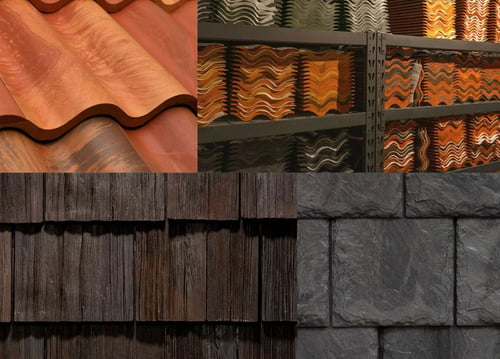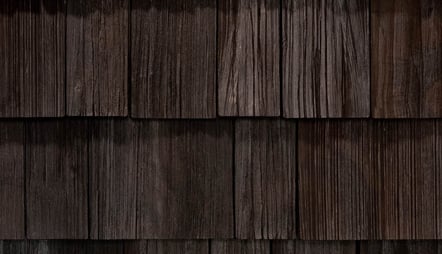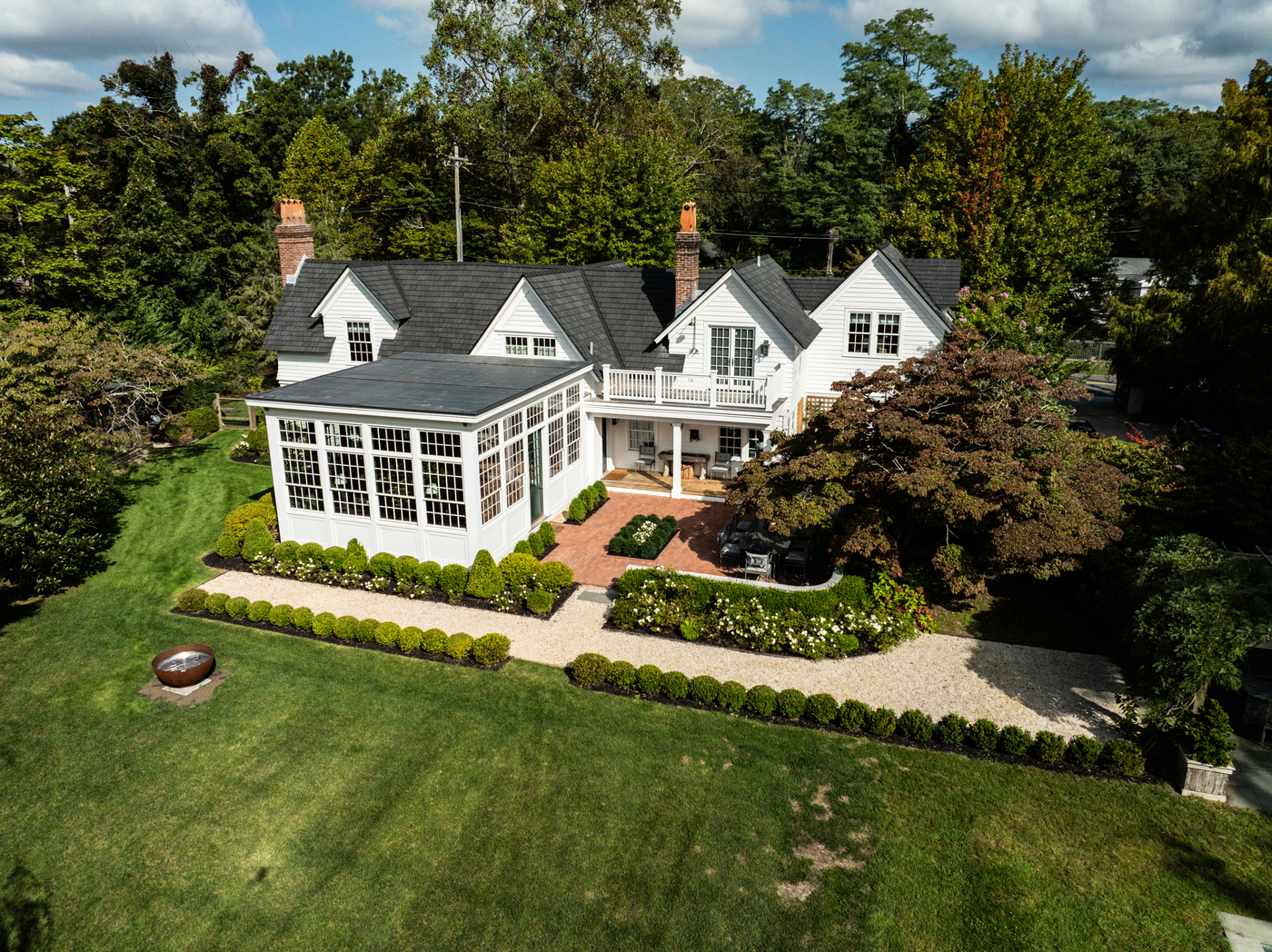
BRAVA Signature Project (Synthetic Cedar Shake):
Transforming A Dilapidated Historic Home Into A Retreat Of Contemporary Comfort
BRAVA helps acclaimed Architectural Digest photographer Douglas Friedman preserve history with modern roofing materials

"My approach to real estate in my life is, it's instinctual. It's a gut feeling."
— Douglas Friedman, Homeowner
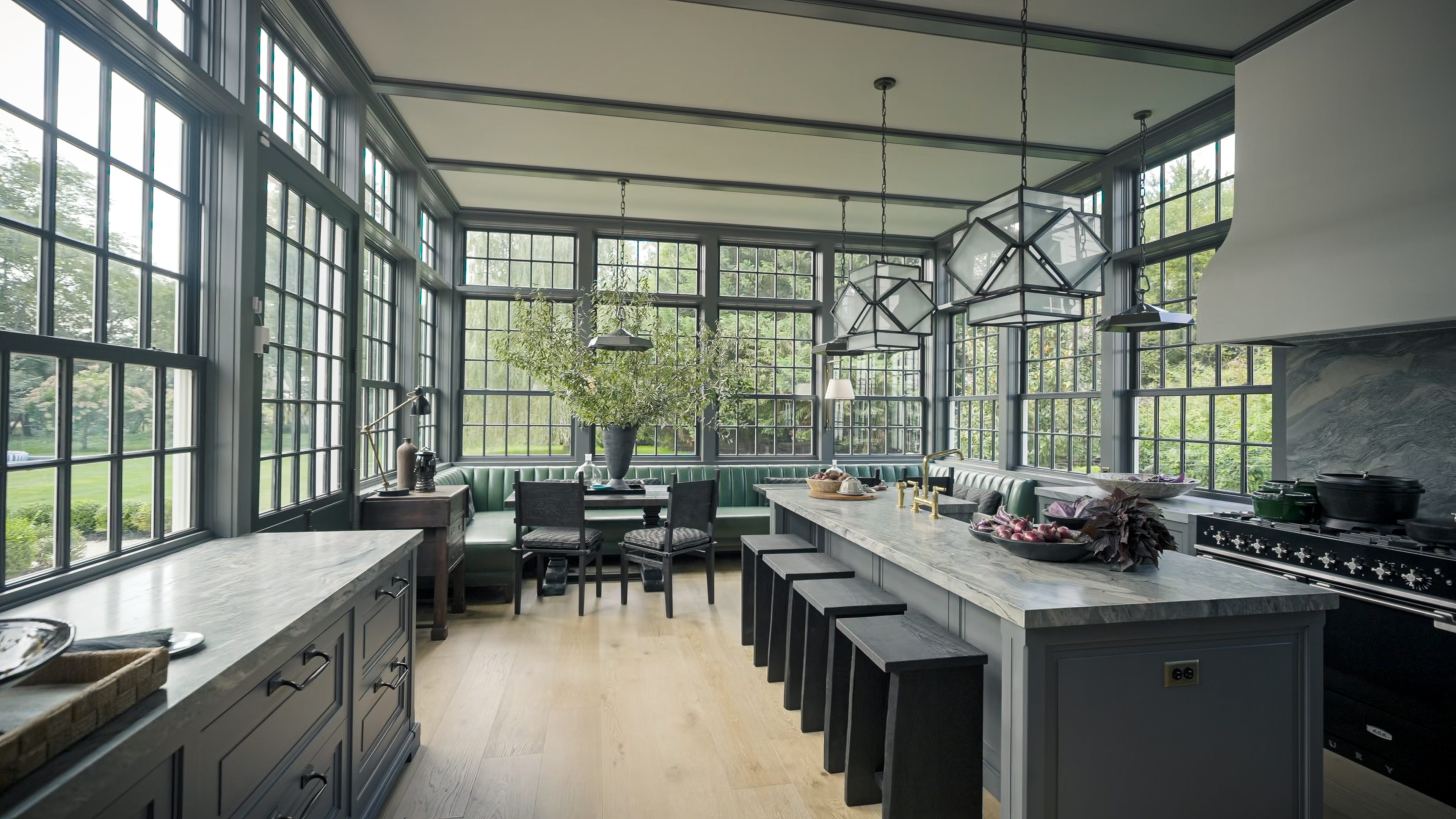
In Brookhaven, Long Island, renowned photographer and designer Douglas Friedman is relaxing in his expansive light-drenched sunroom/kitchen. The impressive 11-foot-high ceiling anchors three walls of windows and banquette seating around the entire back of the room, offering picture-perfect views of the backyard's elegant landscape and the beginnings of an eclectic sculpture collection. One might never guess that this welcoming space previously had a foundation that was rotting from underneath and which had to be ripped out in its entirety.
Founded in 1655, Brookhaven has grown from an eight-square-mile agrarian community on Long Island's North Shore to 325 square miles stretching down to the South Shore, encompassing a rich history revealed in its 16 historic districts, National Register listings, and 46 town-designated historic landmarks. Nestled in a secluded area within one of those districts, this serene luxury retreat is Friedman's dream project, the result of a two-year labor of love.
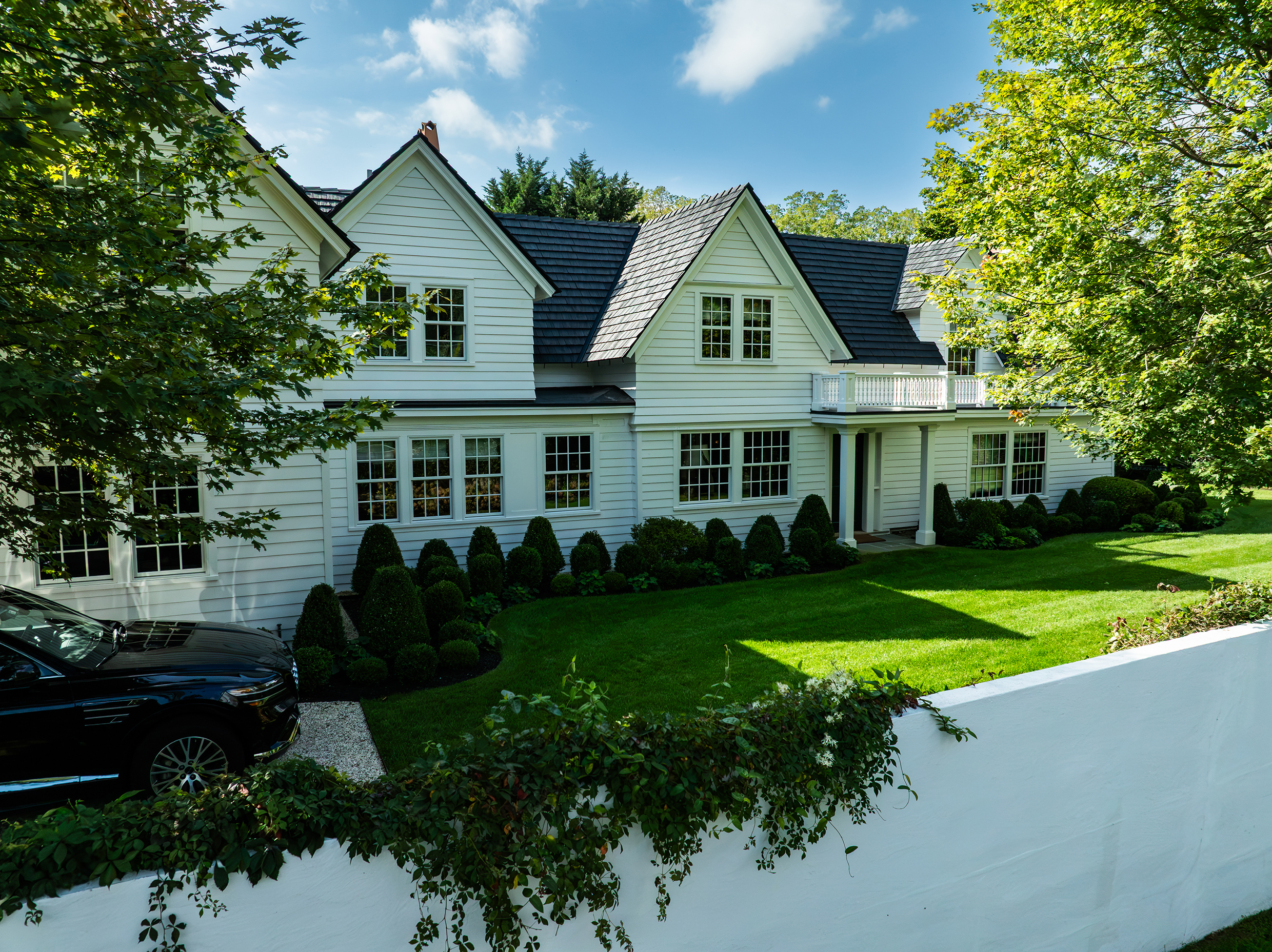
While he was searching for the perfect property to call his third home, Friedman had that familiar gut feeling when he first laid eyes on it. "My broker sent me a video of the front and I thought, this is going to be the house that I live in for the rest of my life."
Friedman's storied career was born from trusting his gut. Born and raised in New York City, he spent a few years after college working in the film industry before that feeling surfaced, tugging with an intensity he couldn't ignore. Throwing caution to the wind, he left Hollywood with little more than his camera, a suitcase, and a one-way ticket to Indonesia.

Friedman traveled the world for a year and a half, letting his heart guide him as he took pictures of everything from sherpas at the foot of Mt. Everest to sharks 100 feet below the Sulawesi Sea, all while absorbing the architectural vernacular of each port of call. Friedman's return to the states set him on his journey to becoming one of the most sought-after photographers in the world, collaborating with top architects and designers and his work appearing everywhere from Architectural Digest to Vanity Fair.
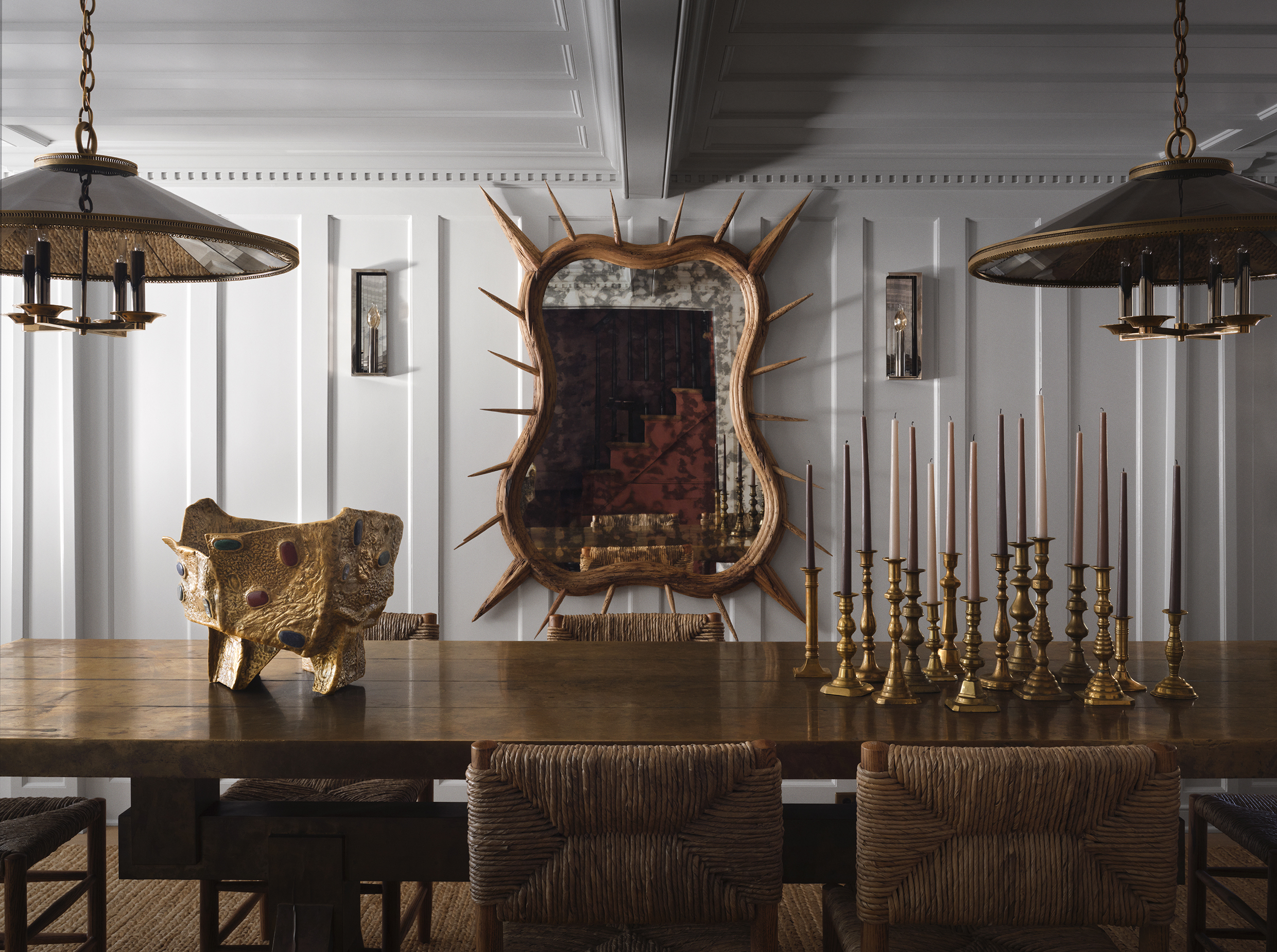
Douglas Friedman Photography for Architectural Digest
Much as his celebrated photographs tell the stories of their subjects, Friedman's beautifully restored residence is a 3D representation of craftsmanship, material authenticity, architectural preservation, and the evolving relationship between historic buildings and modern building technology.
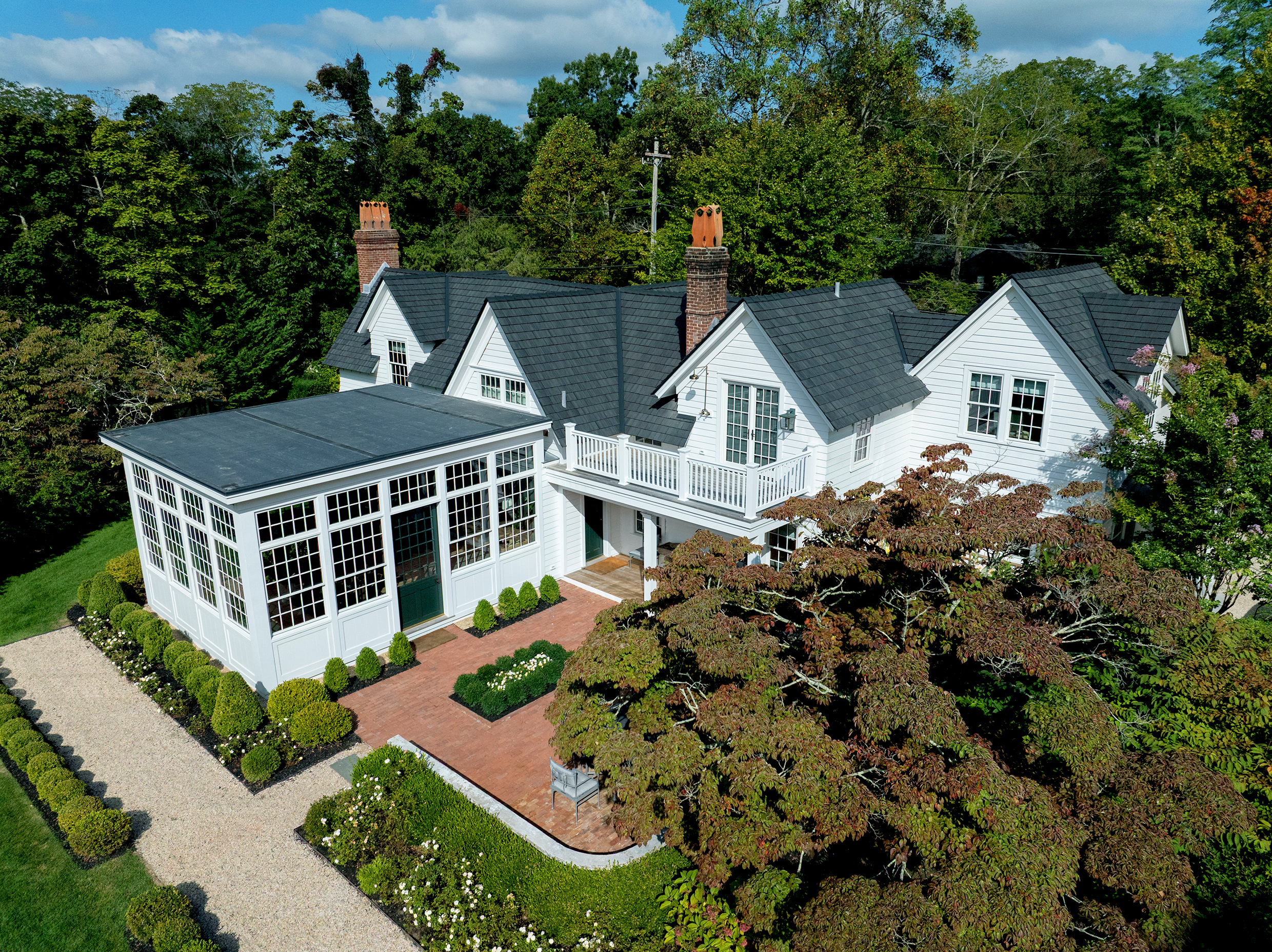
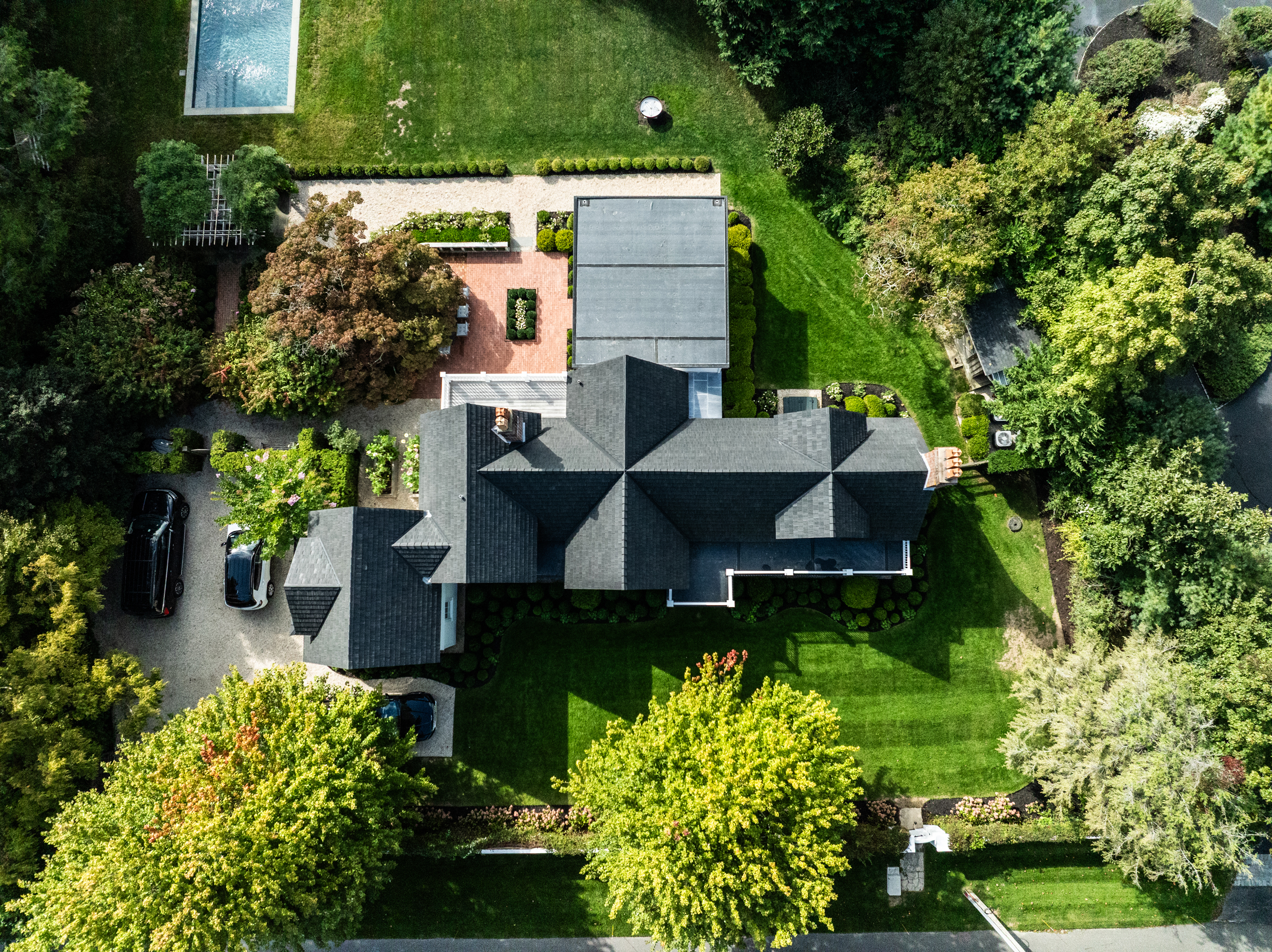
Dating back to approximately 1870, Friedman's home occupies an important place in the community's architectural history as one of Brookhaven's most recognizable estates. Long before he meticulously restored the property with the help of designer Steven Gambrel and architect Marcus Ziemke, it was known as Fireplace Farms, a country estate originally established with a riding academy and horse farm and whose architectural character reflected the English sporting traditions of the time. The home was also frequently called the House of Seven Gables for its seven distinct acutely-peaked triangular portions of wall between the edges of its intersecting roof pitches. (Not to be outdone, Friedman added two more.)
At the turn of the twentieth century, Fireplace Farms took on even more distinction. One of its most notable owners was a wildly successful investor believed to be the wealthiest woman of the Gilded Age, one of the most significant periods of American economic history. Savvy financier Henrietta “Hetty” Howland Green greatly expanded the wealth she'd inherited from her family's whaling business through disciplined investments — what modern investors would call value investing — in everything from railroads and government bonds to mortgages and real estate. In an era when virtually every major financier was male, Hetty was worth an estimated $100 million by the time of her death in 1916.
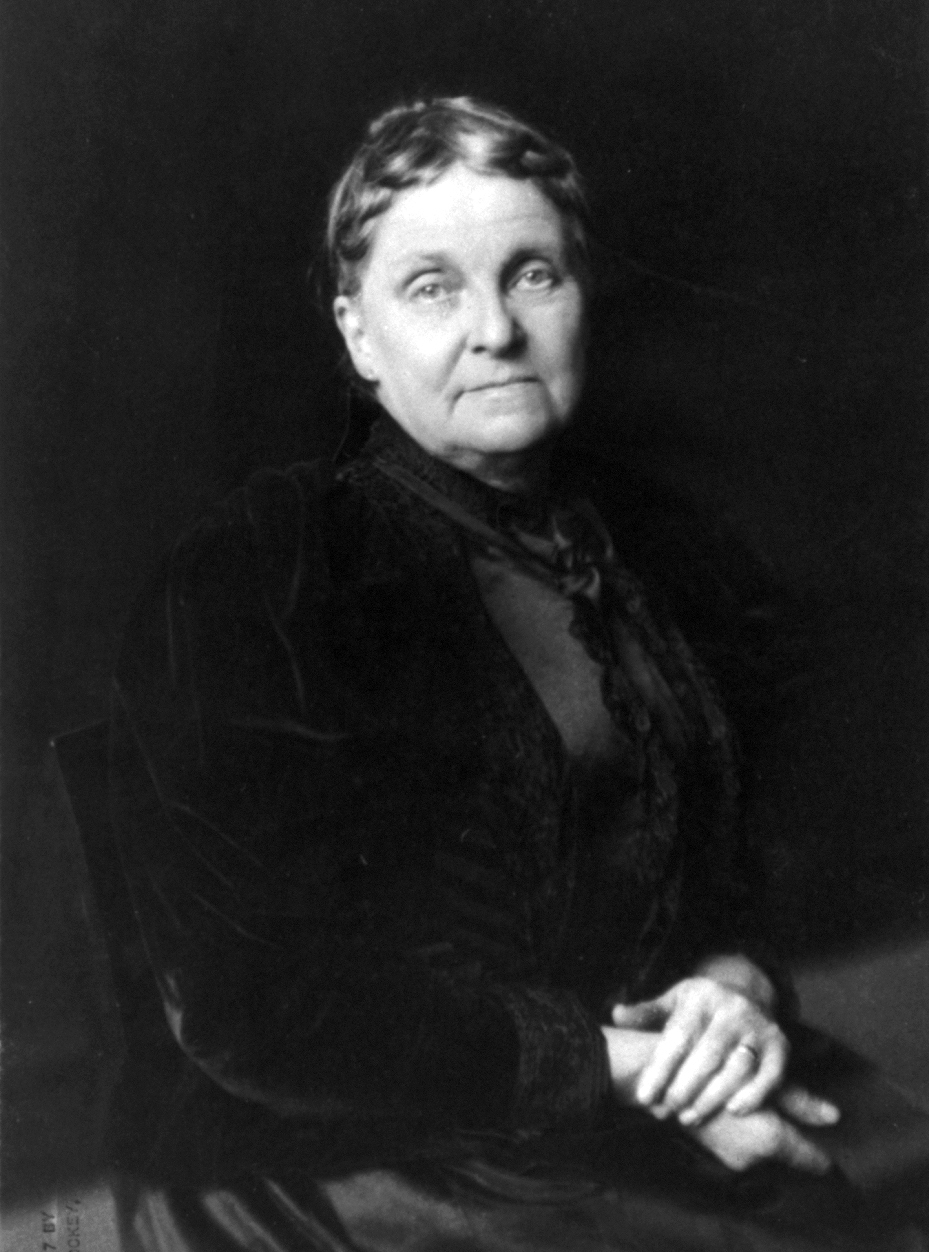
Credit: Hollinger & Rockey / Library of Congress.
This incredible fortune didn't exactly move Hetty to feelings of generosity, however. While she earned enormous respect within the financial circles of the time, her brilliance was often overshadowed by her legendary reputation for extreme frugality. That reputation inspired sensationalized newspaper headlines, which ultimately gave rise to her infamous nickname "The Witch of Wall Street."
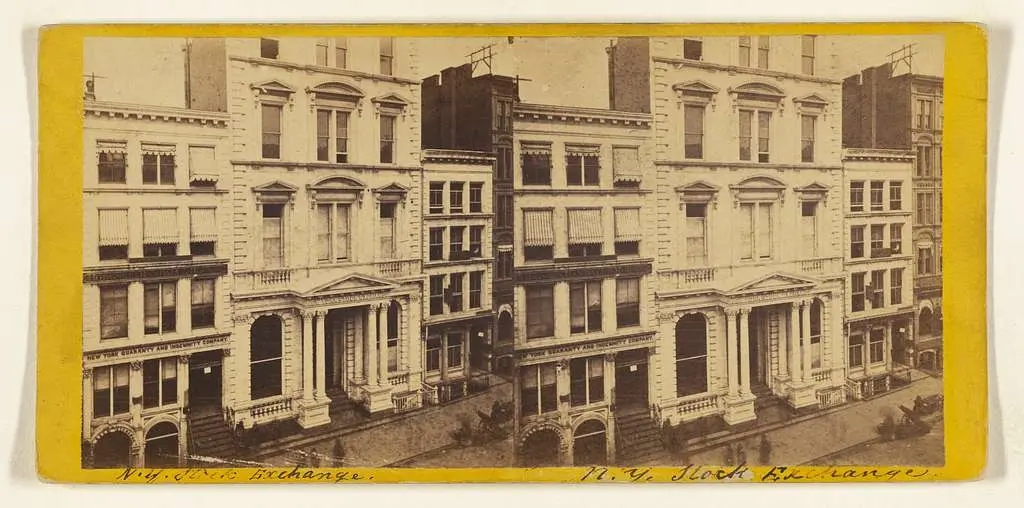
"From what I understand," shares Friedman, "she was a miser, and she was so cheap that she didn't get medical attention for one of her kids, and he lost his leg."
That kid was her son Edward Howland Robinson Green, better known as Colonel Ned Green. Perhaps as a gesture of regret — perhaps not — Hetty purchased the Brookhaven property for him.
Throughout the rest of the 1900s, Fireplace Farms passed through multiple owners. It did undergo some cosmetic renovations during those years, but by the time Friedman first stepped foot onto the property it was so far from move-in ready that almost any other prospective homebuyer would likely have balked. Friedman, however, was thrilled by the possibilities.
"It was a cold, damp day. It wasn't winter anymore and not quite spring yet. It was the ugliest season, and I walked in and it just felt like home. Awesome."
Unaware of the full extent of construction challenges yet to surface, Friedman's love of the house and its history fueled his drive to tackle the project head-on, ready to put his talents to work in creating his own personal vision of domestic bliss and artistic beauty. It wasn't until after he'd acquired the property that Friedman learned an enormous amount of concealed and desperately needed structural work lie in wait.
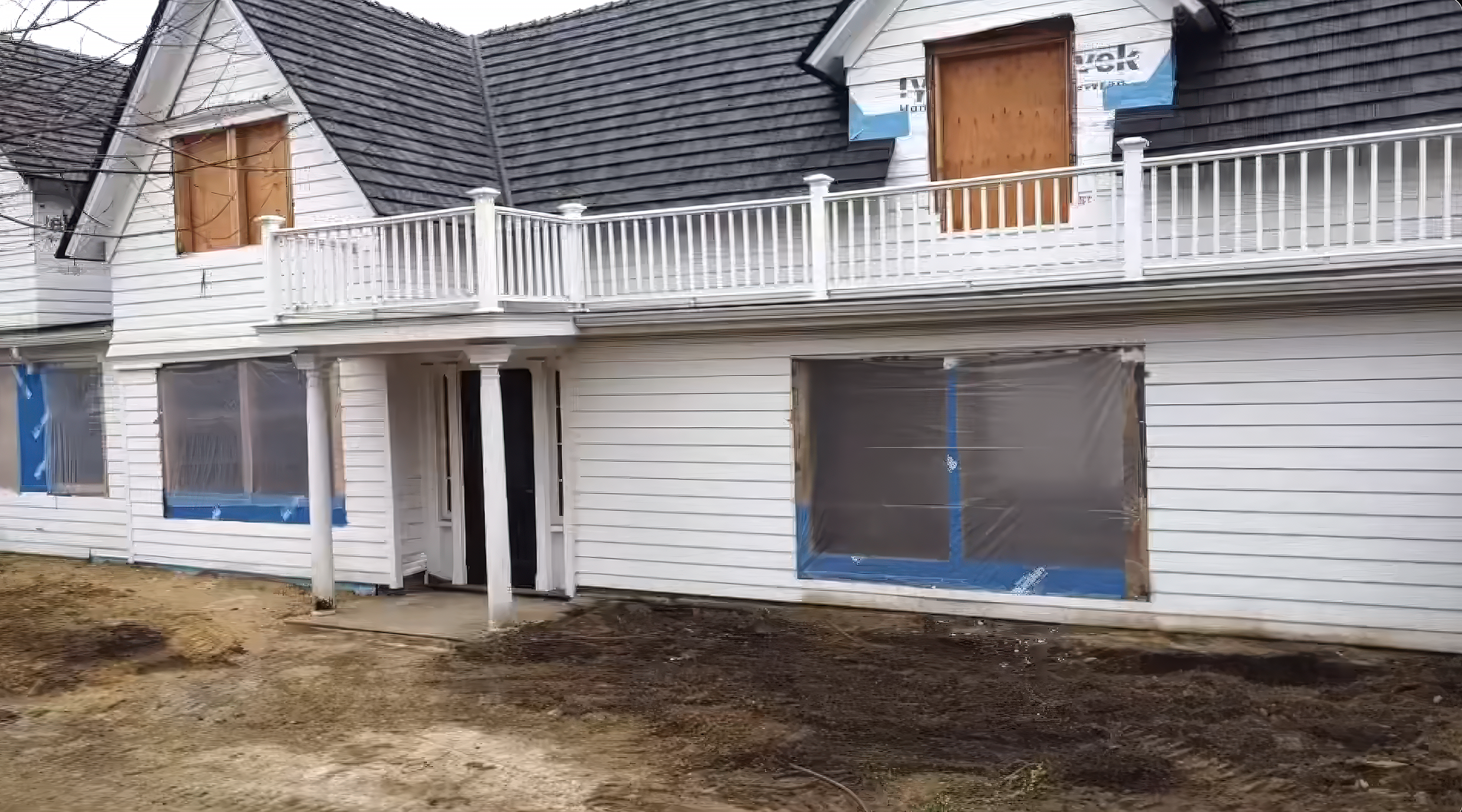
"All these things you find out after you've purchased the house and you're kind of stuck with oh my God, what have I done? The underlying bones of the property were in need of repair. It didn't have a proper foundation, it didn't have a basement, and it also needed a new roof."
Of all the challenges that awaited him, however, Friedman would never have guessed that the roof would be the greatest.
Enter BRAVA.

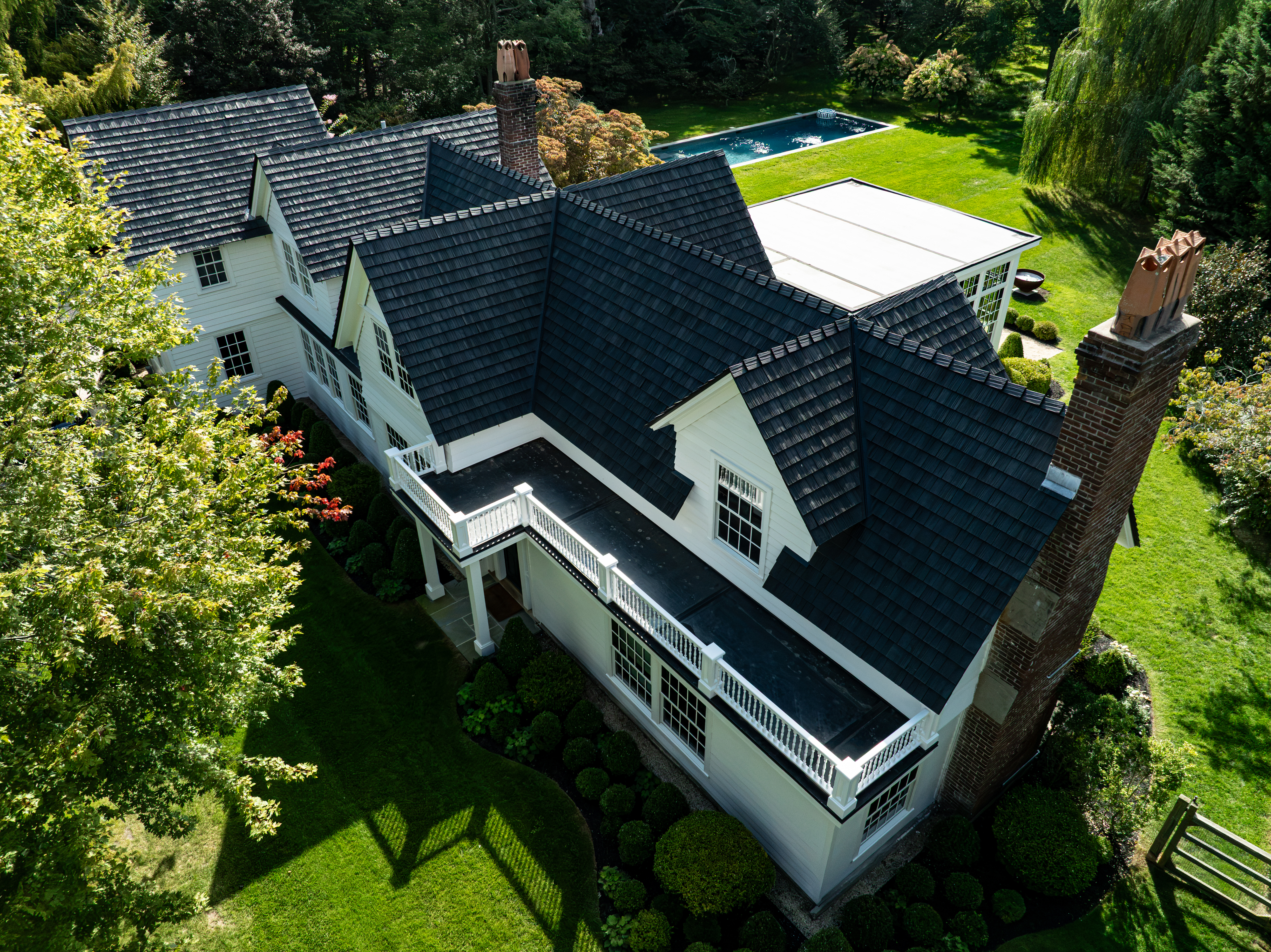
"So it's not the greatest time for a man of my age to be outside in the sun, but it's a really, really beautiful time to see how beautiful this BRAVA roof is. You can see the texture in all of these shingles and it doesn't look like plastic. And one of the amazing things about this roof is that they send you this really broad assortment of these shakes. And I don't know if there's 10 or there's 20 or there's 30 different patterns, but there's so many that each, there's never the same shaped shingle next to the same shaped shingle. So you never get a sense of a repeating pattern. It doesn't look clone stamped. You get to look like you have a roof where every one of these shingles is unique in its shape and its design. And I mean, that's evident here when you kind of look at the shadow and the light reflecting off of the roof."
— Douglas Friedman, Homeowner, AD Photographer
"I was in front of the house and people stopped in their cars and asked me about the BRAVA roof. That's how good it looks. It looks incredible."
— Douglas Friedman, Homeowner, AD Photographer
It was Friedman's love and appreciation for the visual arts that naturally guided him toward restoration rather than renovation. He consistently describes himself as caring for the home rather than transforming it, stemming from his self-imposed stewardship of such a special piece of history.
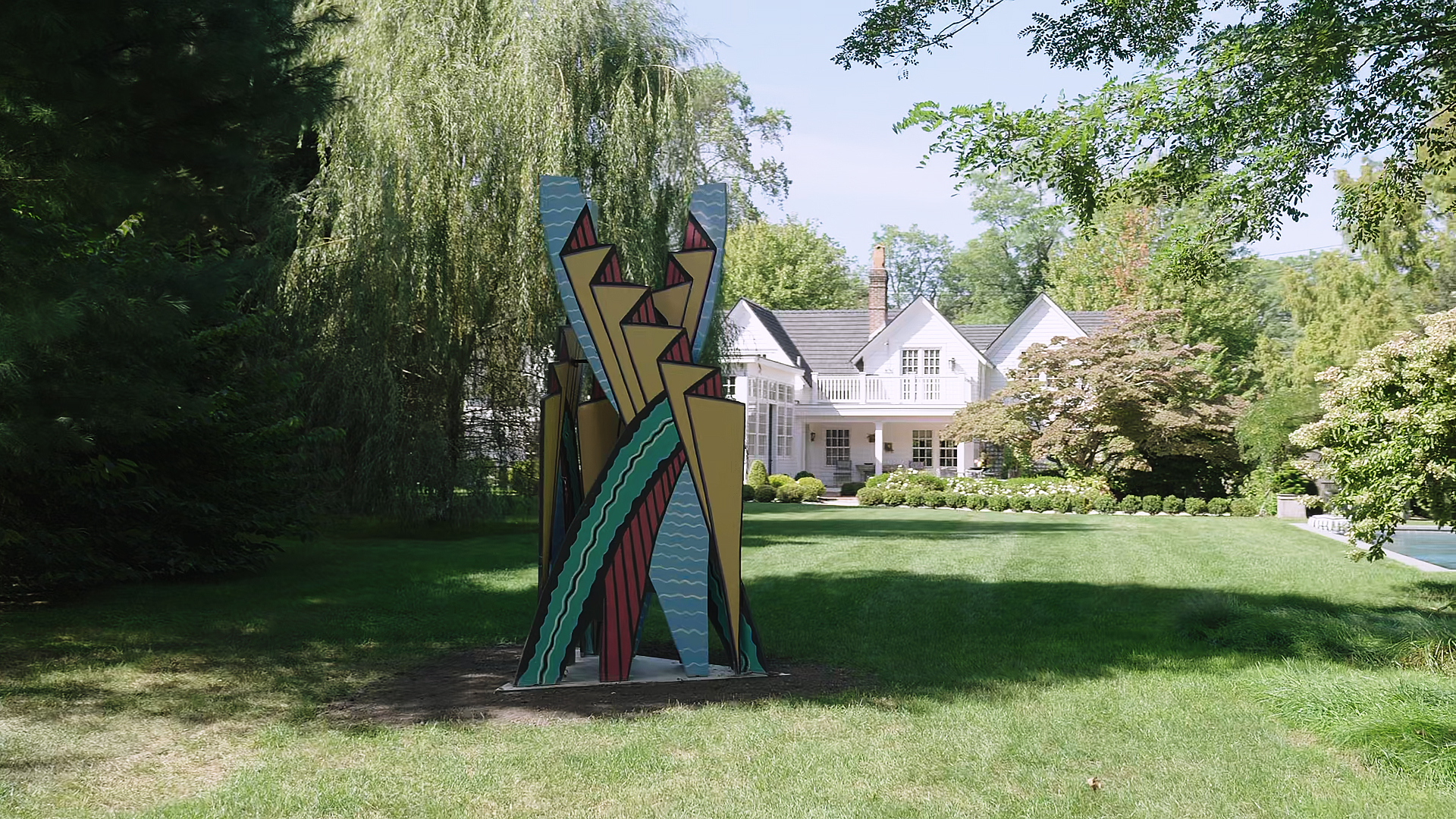
"I'm glad I live in a historic neighborhood," says Friedman. "I chose to live in Brookhaven in this historic district because of the way it looks, because of the way the buildings are.
"Historic preservation is important when it's managed by a community properly. You hear a lot of stories about preservation boards overreaching, or maybe it's a frustrated architecture designer that is flexing because they can. You have neighbors that have no regard for their neighbors or their community. What's the vernacular where you live? How do you respond to that? How do you respect it? There's a reason things were built this way when they were built 150 years ago. So you want to honor that."
Taking a turn around the home's exterior, Friedman gestures toward the BRAVA composite tile that now spans the property's roof. "I can improve upon certain things like the roof, which we did, but this now looks like a roof that would've existed on this house 150 years ago."
When considering the right building material for the impending complete roof replacement, Friedman initially thought a cedar shake shingle was the best choice, and that was what he submitted to Brookhaven's historic board. However, as work on the house began, he learned that a real cedar was, in fact, not a good solution.
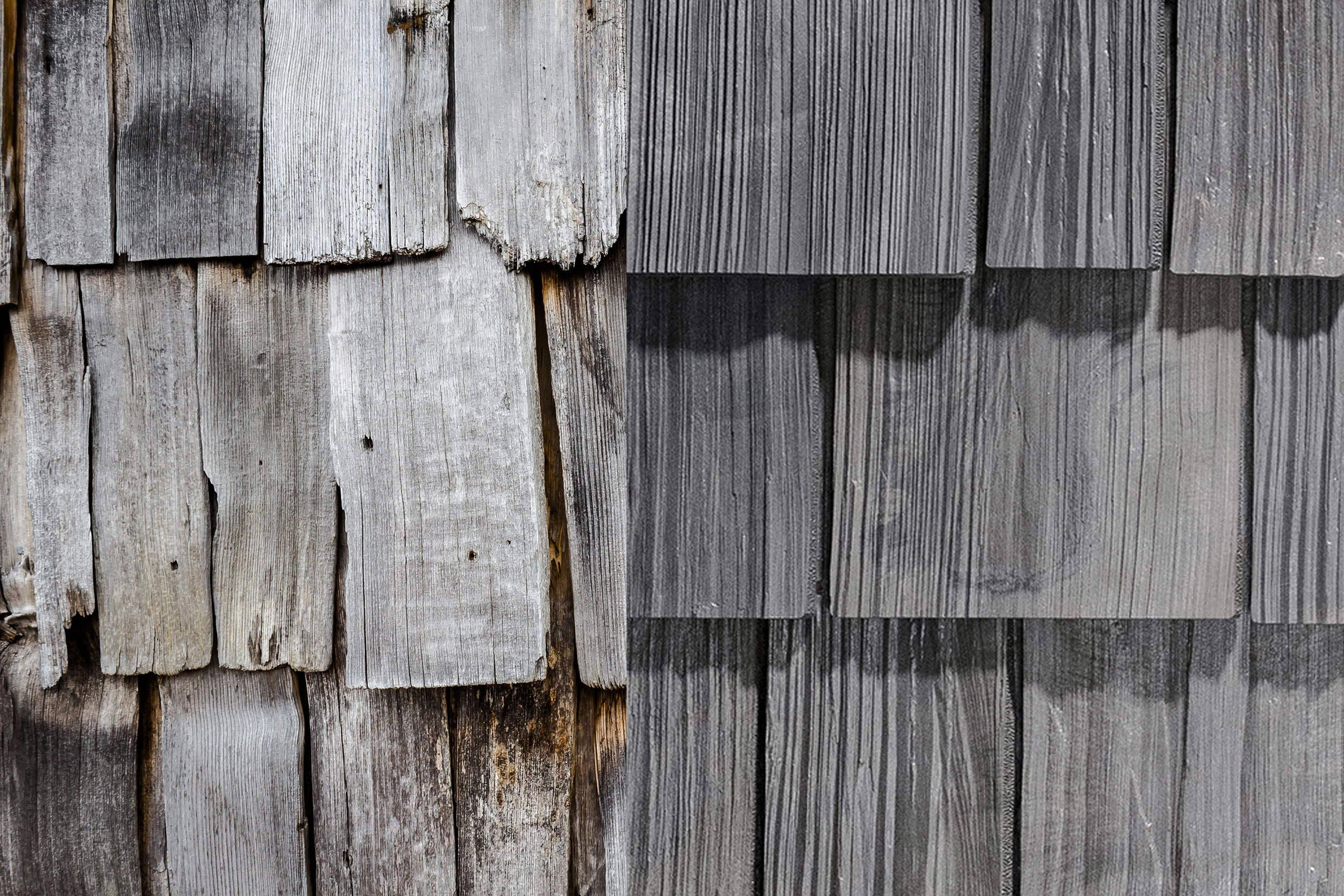
Natural cedar shakes are nowhere near as strong and durable as composite roofing tile, and therefore have a substantially shorter life. They come with high upfront costs and require frequent maintenance, being notably prone to rot from mold and mildew growth as well as insect damage and making the roof extremely vulnerable to leaks. What's more, cedar shakes catch fire easily, posing a great risk to the home that most historical boards are not willing to take. Friedman then took a deep dive into researching alternative materials in roofing products — and he discovered BRAVA.
"This incredible roofing looks just like old growth cedar shake," says Friedman about BRAVA's revolutionary composite cedar shake roofing. "It has great insulating properties. It's resistant to fire much more than cedar shakes, and much more attractive than asphalt."
After long discussions with the roofing manufacturer, he was still a little unsure being that composite roofing was new to him. So he and his construction team asked BRAVA to send some of their cedar shake roofing to build a mockup.
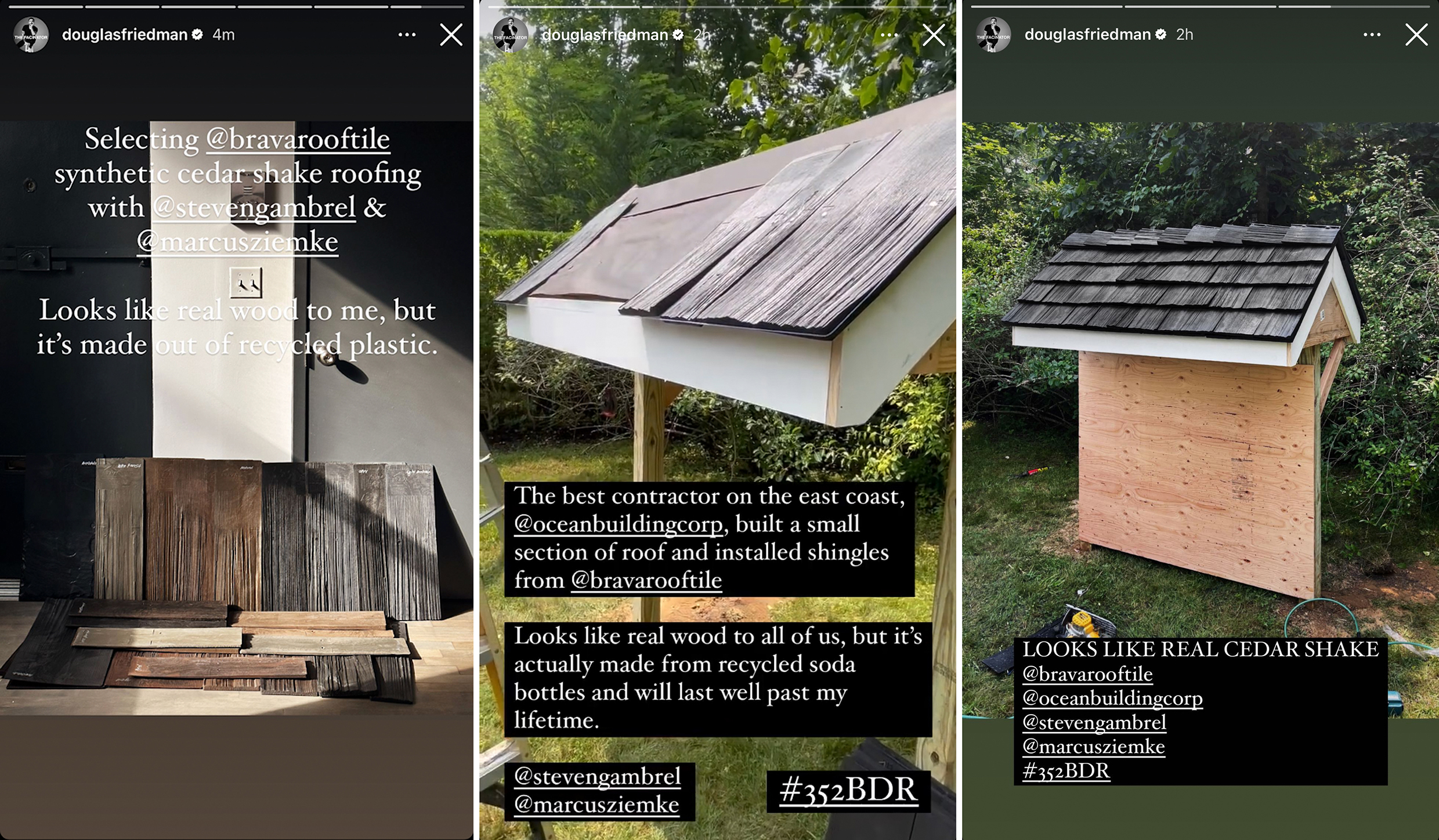
"We applied the product so we could see what the cap and the slope of the roof would look like. We left it out in the sun in the elements for a while, and it looked great. I brought people by, I took pictures of it. I showed friends, and everyone thought this was a great looking roof."
Friedman was highly impressed not just by BRAVA roofing tile's proven long-lasting durability; he found its true-to-life look of real cedar, with all the rustic hand-split textures and remarkably natural-looking, vibrant color blends infused throughout each tile.
"Each tile is different. You don't see repetition when you look at these tiles. And so I thought, let's use this. This seems incredible. It's sustainable. It's made out of recycled materials. It'll last for hundreds of years.
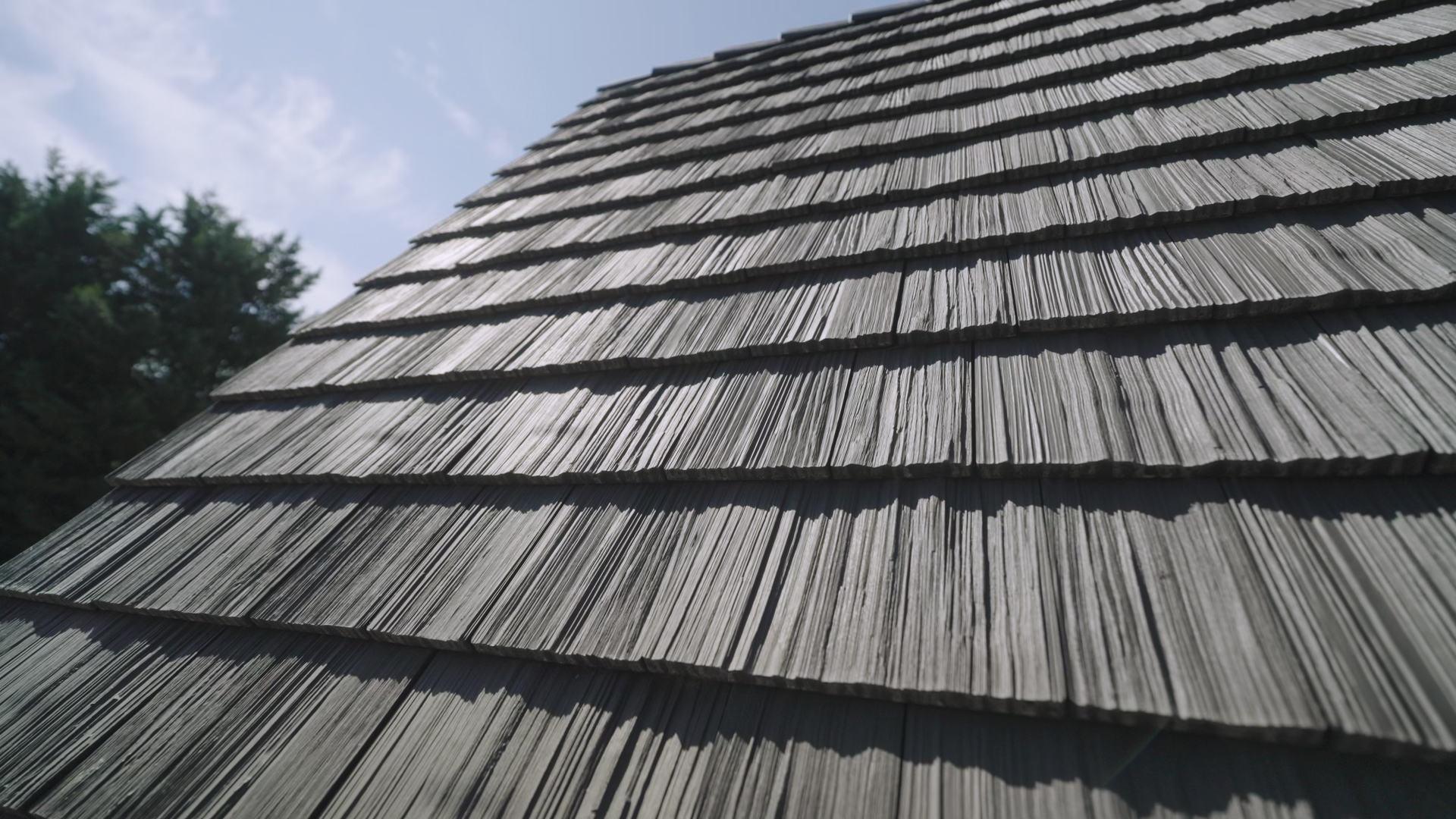
"They peeled off the old roof, and I feel like it happened so quickly. All of a sudden there was this new gorgeous roof on the house."
There was a big problem, though. Friedman neglected to inform the Brookhaven's historic board.
Local preservation officials became aware of his BRAVA composite roof after its installation. Because the residence falls within one of the historic districts, they balked at the use of an unfamiliar and unapproved synthetic roofing material and issued a stop-work order.
"The historic board was upset that we had used a material that they were unfamiliar with," says Friedman. "So they called us in for an emergency hearing." What followed became an important chapter in the home’s restoration.
"The board said 'you can use cedar, but we understand that most people can't afford cedar, so you can use asphalt.' They were not into plastic roofing. They didn't understand what we were doing. I think there were some frustrations with the head of the board with the fact that we didn't seek that approval for the material, which is my fault," admits Friedman. 'But in hindsight, I thought we could go back and negotiate, or at least explain what we were doing and why we were using this material and why it would be great for other houses in the neighborhood. Well, they weren't having any of it, and wanted us to remove the roof and replace it with either asphalt or cedar."
Luckily, Friedman was able to communicate with the Brookhaven's commissioner ("He liked the roof," says Friedman proudly), who then brought in the country commissioner. "They both came by and determined the renovation was being done properly. They thought the roof was a remarkable solution in a community with incredibly strict guidelines, and the roof was approved."
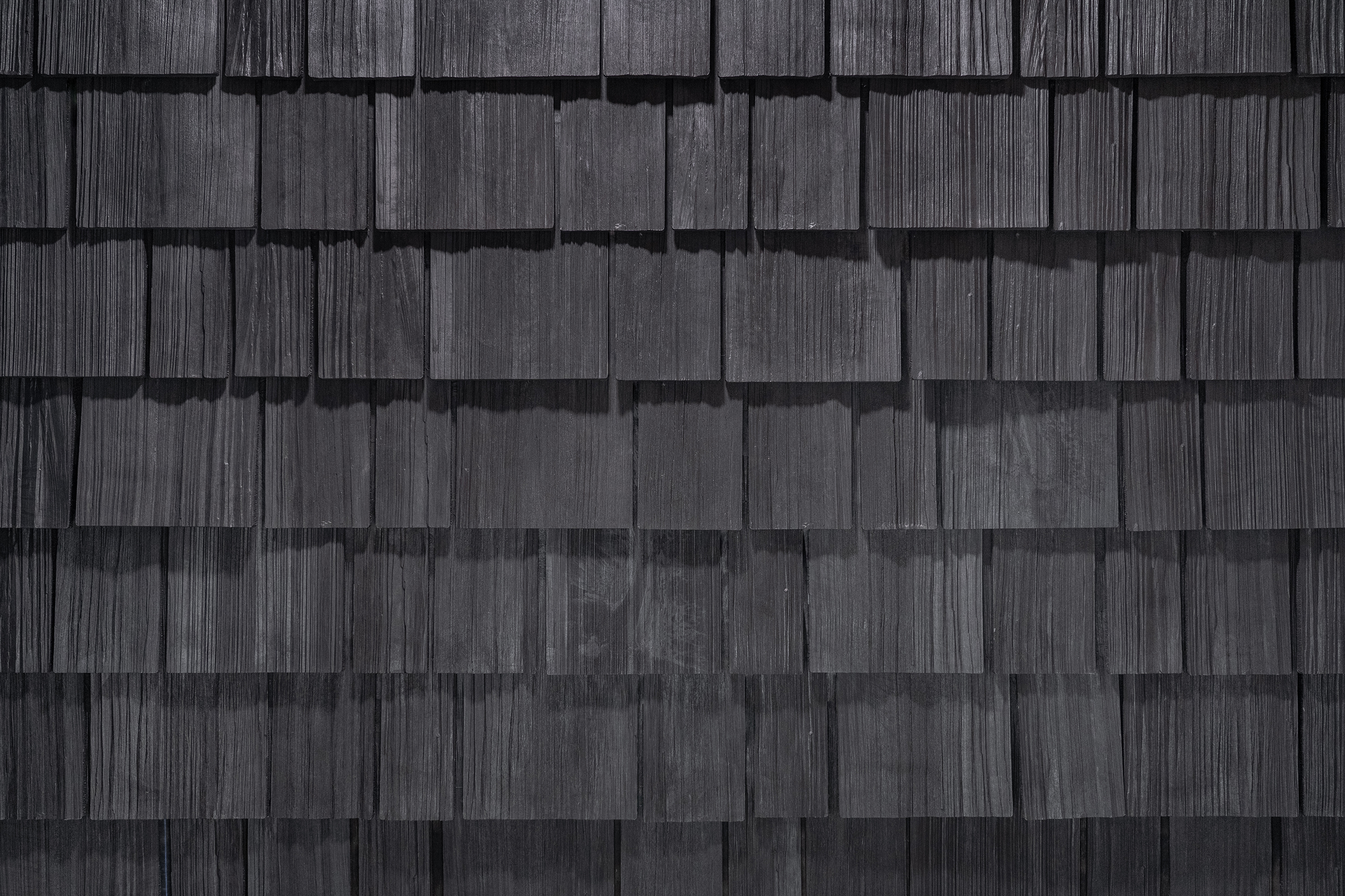
In addition to impressing both Friedman and the historical board with its BRAVA composite roofing tile's extensive testing has earned it third-party certifications for the highest levels of wind, hail, and fire protection. It has the highest impact-resistance rating (Class 4) against hail and storm damage, as well as Class A and Class C fire-resistance ratings. BRAVA tile also has unsurpassed UV and fade resistance, keeping the roof as pristine as the day it was installed.
With the recognition from local officials agreeing that the roofing system preserved the home's historic appearance while also providing a practical solution for long-term preservation, this turn of events established a precedent for future restorations within the district. "From what I understand," shares Friedman, "others in the neighborhood are also going to adopt this."
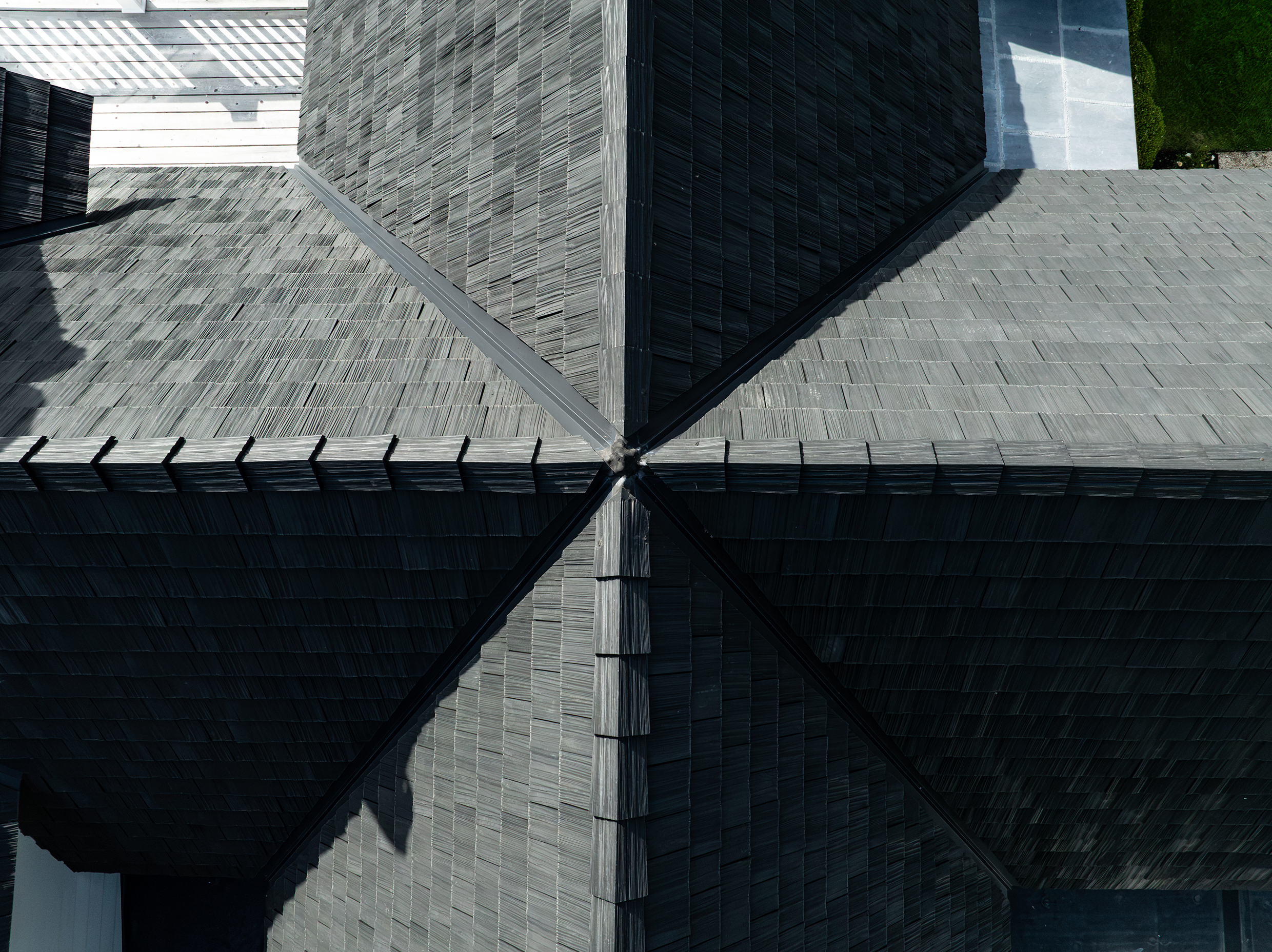
Ocean Building Corp. of Hampton Bays, New York, was chosen to install the new BRAVA roof. The contractor spoke to BRAVA's technical team to ensure their familiarity with the product and how to install it properly. "It went in fast, and they loved working with it," says Friedman.
The team of installers devoted time and extra care to the removal of the existing roof so as not to disturb the underlying bones of the house (which also underwent repair). Exercising skill and craftsmanship, they also installed BRAVA roofing accessories, paying special attention to the roof's valleys and penetrations. The ease of working with BRAVA's lightweight composite tile and the contractor's skills combined perfectly, resulting in a successful installation.
"I had this incredible team, which allowed me to not go through what most people do with their contractors, which is everyone is always in agony about decisions that were made that they weren't on top of. And I just kind of let these guys do what they needed to do. I made my suggestions and they ran with it, and they made the right choices."
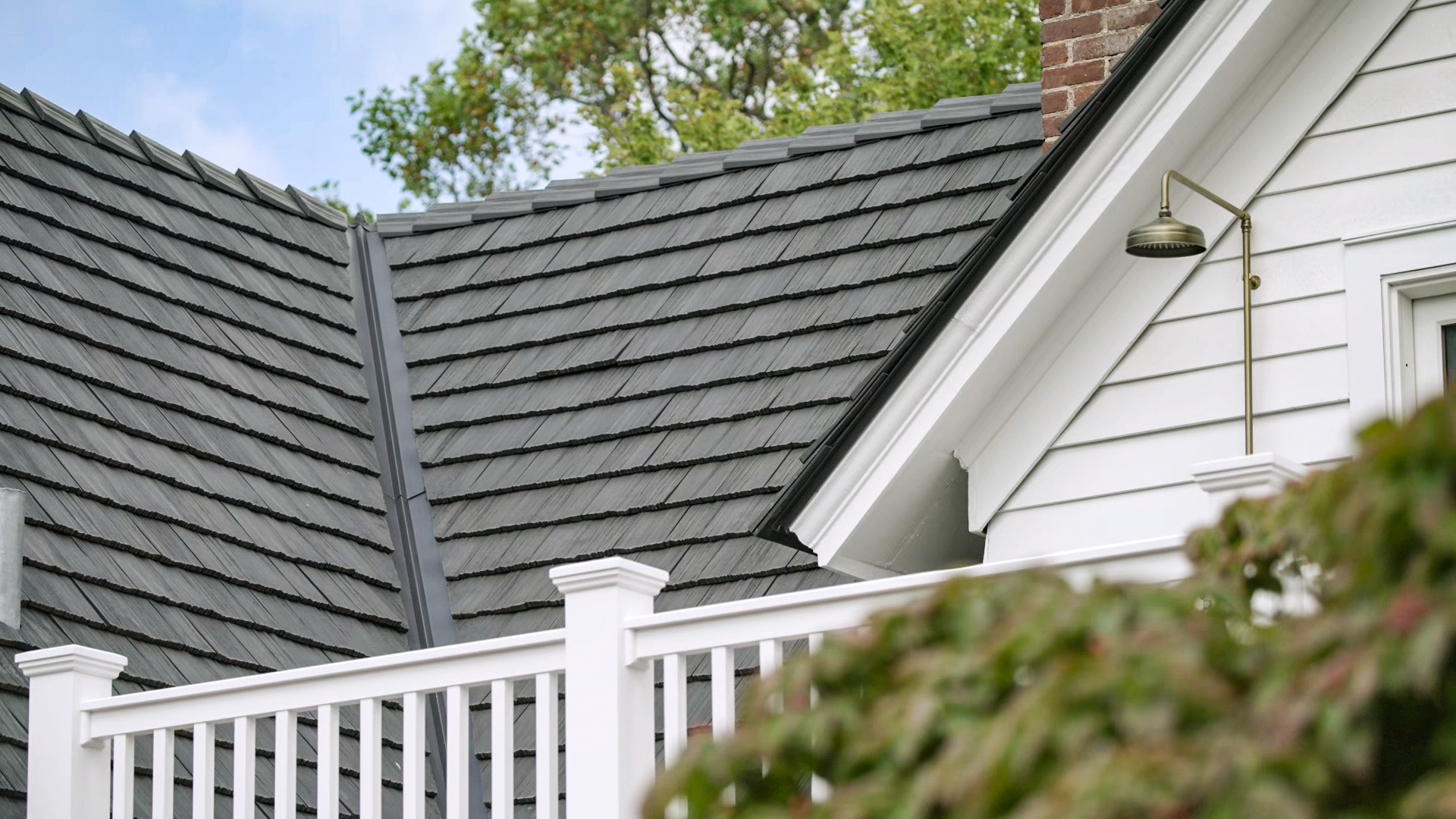
"I love talking about this roof. Again. It's like deep down inside I have this romantic attachment to this idea of a cedar shake roof. It was financially, it was just way out of, and now living with the roof, watching the reaction of my neighbors and the community around me to this roof, and they do react to it, which is interesting to me. I wouldn't have it any other way. I mean it's a beautiful thing. It's a beautiful silhouette when you see how the light catches it, how it kind of meanders down the side of these eaves and the caps at the top of the, on the very top kind of apex. It's just, it's really pretty. It's a nice silhouette." - Douglas Friedman
"You never have to replace a BRAVA roof. It'll last for hundreds of years."
— Douglas Friedman
It's the hallmark of such a respected name in the design world to have carefully chosen materials inside his new home — reclaimed stone floors from Italy, handmade bathroom tiles, a collection of antiques, and specially commissioned one-of-a-kind pieces from furniture to artwork created by various artisans and craftsmen. Friedman's love of materials is reflected in his just-as-carefully chosen BRAVA cedar shake composite roof.
"It felt like a gamble," he says, "and I'm glad I took it."
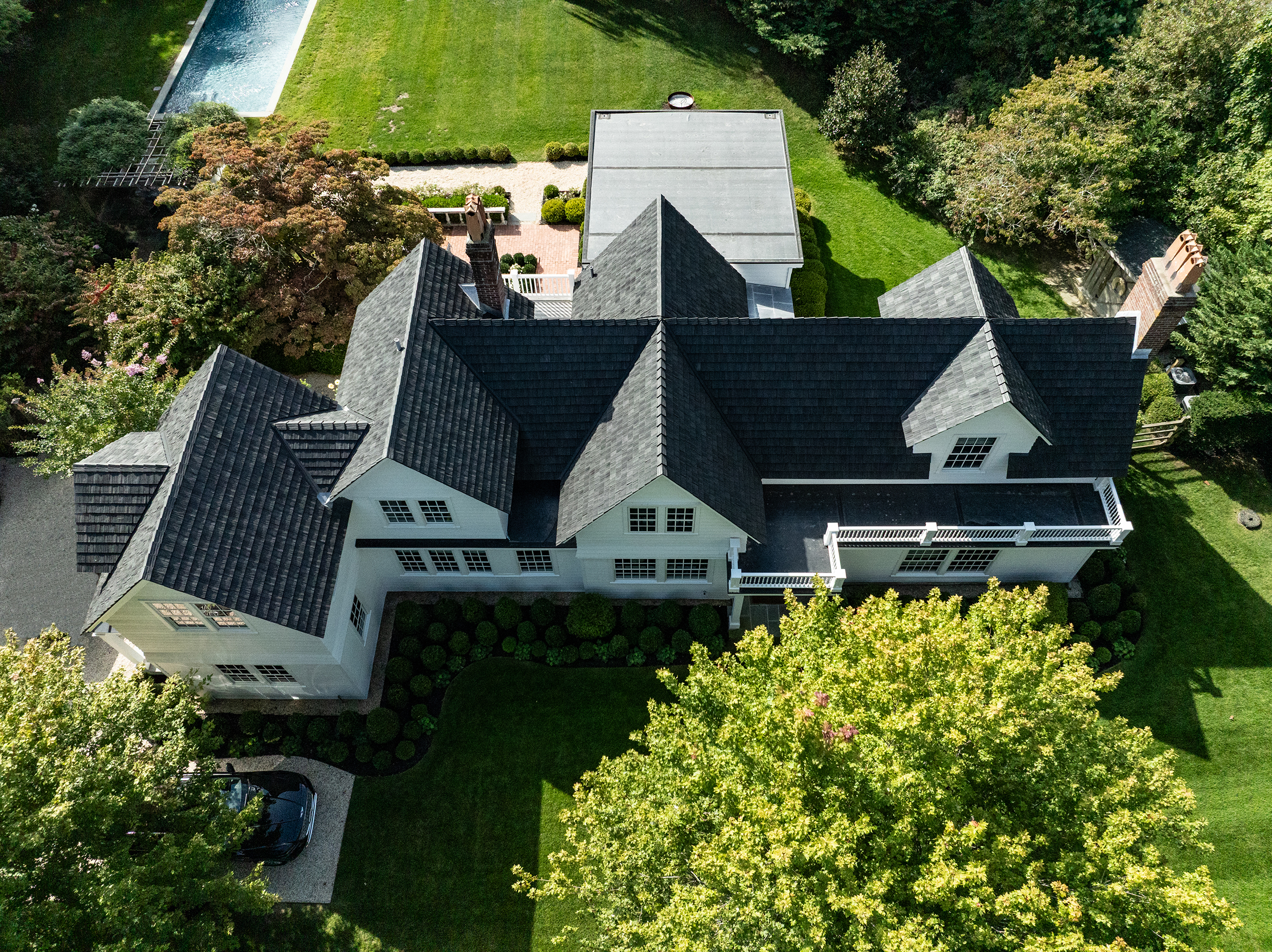
A year and a half in, the roof has a distinct patina that Friedman can't stop talking about. "The sun has baked out the initial shine that was there and the roof is starting to appear to age, which is so beautiful— but it's not aging in a destructive manner. It's almost like a scenic painter has come in and aged it for me in the most beautiful way."
Recently, Friedman met a woman at the local farmers market who said she'd heard that his roof was made out of recycled soda bottles. "I said to her, it's actually this incredible material. And she said, 'it looks so beautiful.'
"I've been in this business a long time, says Friedman, "and rarely do people talk about their roofs.
"So I was surprised that this habit was forming in my neighborhood where people wanted to comment on this roof."
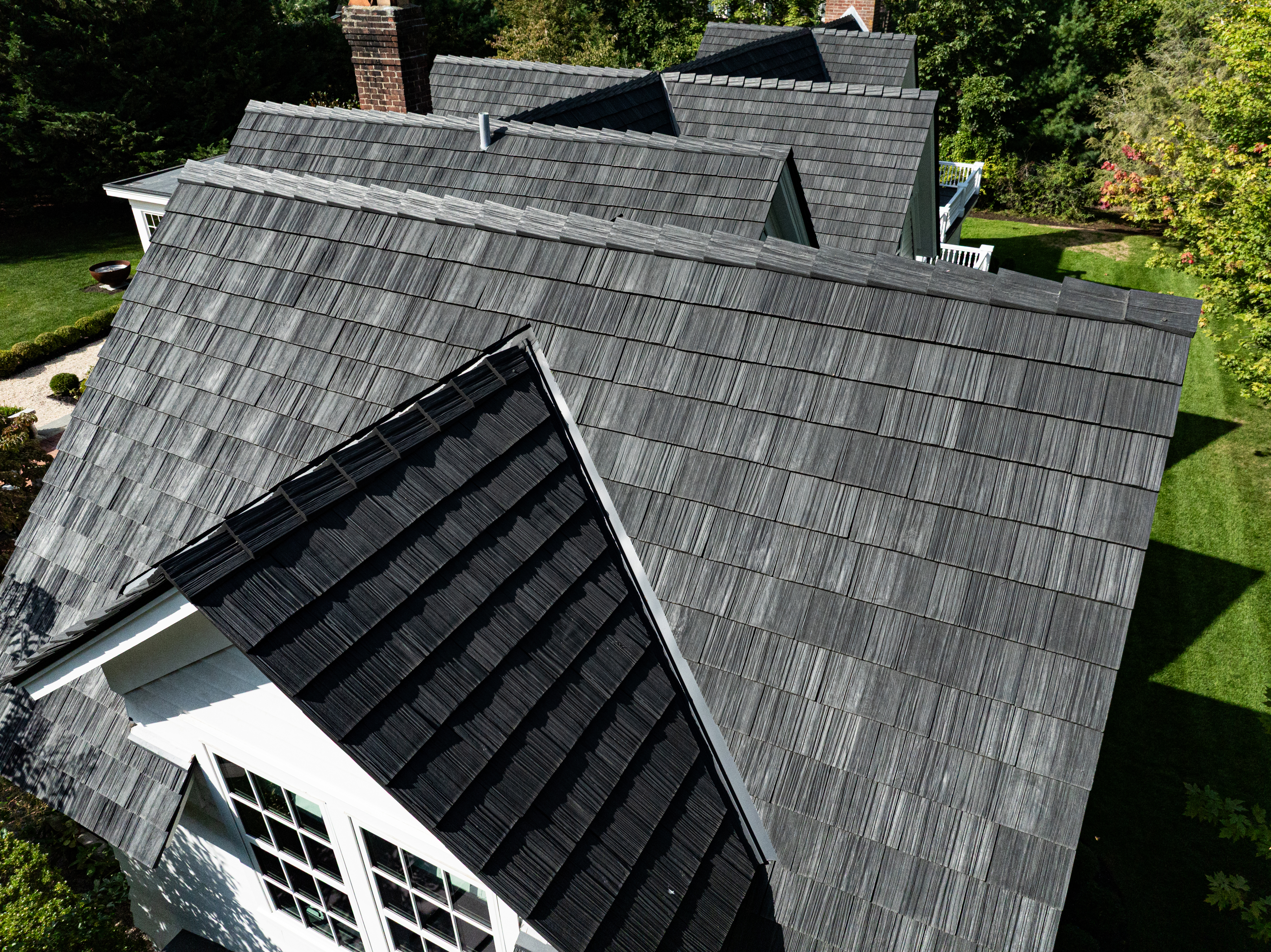
Having completed the project of his heart's desire, Friedman is visibly thrilled and excited. He's also at peace, knowing that he's honoring the legacy of Fireplace Farms and The Witch of Wall Street while also promoting how today's restoration can preserve centuries-old architecture with modern technology and without sacrificing authenticity. And with BRAVA composite roofing tile bridging the gaps between historic town restrictions, the highly desired look of natural cedar, and unparalleled performance and protection, Friedman is more than ready to put his feet up and reap all the rewards of his lovingly restored home.
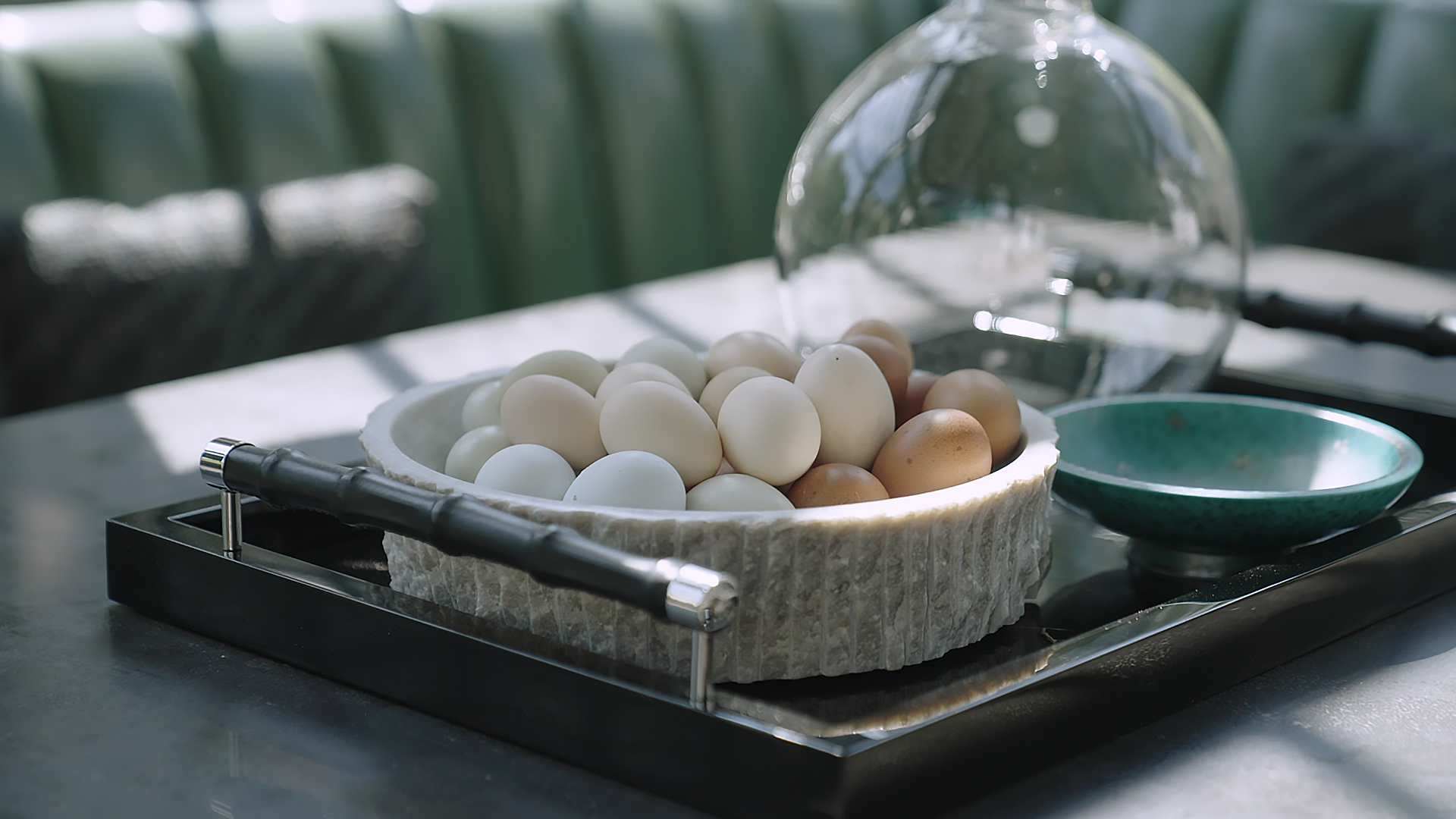
"Now I just want to actually live in it. I don't want to create it anymore. I want to just enjoy it and share it with my friends and my family. I haven't even cooked a meal in the house yet, so I think maybe that's what I'm most excited to do. Just turn on the stove and fry some eggs."
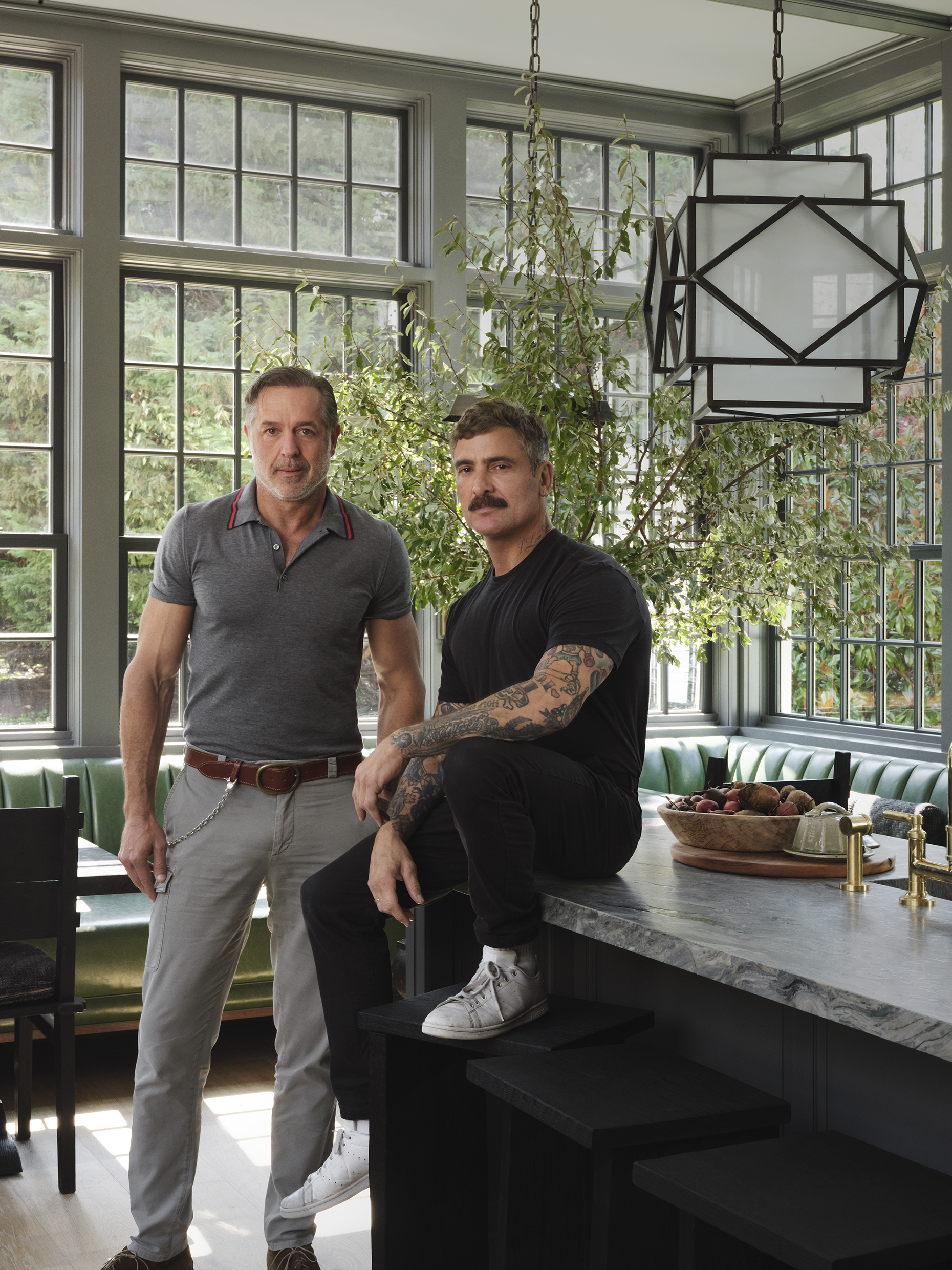
About Douglas Friedman
Douglas Friedman is an acclaimed American photographer renowned for his striking and evocative images that capture the essence of luxury, architecture, and design. With a career spanning over two decades, Friedman is a prominent figure in the world of visual arts, specializing in high-profile interior and lifestyle photography. Known for his work with leading designers and architects as well as major publications including Architectural Digest, Elle Décor, and Harper's Bazaar, Friedman is often written about by the same publications for which he shoots. His photographs are celebrated for their meticulous composition, sophisticated use of light, and a deep understanding of space and form.
About Ocean Building Corp
Ocean Building Corp is a leading New York residential home building company based in the Hamptons that has built its reputation on design, unmatched quality, and attention to detail. Their mission is to turn their customers' visions into a reality, creating homes that embody elegance and innovation.