Which premium roof is right for your home?
Metal roofing is often promoted as the last roof you will ever need. It can be durable, attractive, and well suited to certain architectural styles—but it is not without tradeoffs.
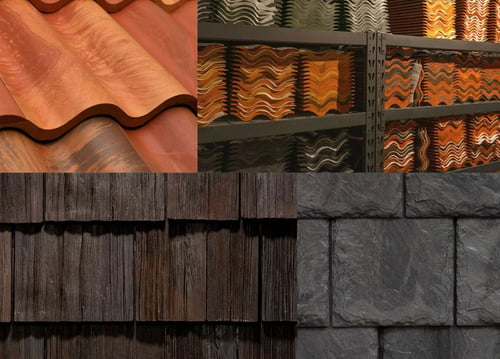
For homeowners who want lasting performance without the industrial appearance, visible denting, heat buildup, or maintenance concerns associated with some metal roofing systems, BRAVA composite roof tile offers a compelling alternative. It combines the authentic appearance of slate, cedar shake, or traditional clay tile with modern composite engineering.
BRAVA vs. Metal Roofing at a Glance
| CONSIDERATION | BRAVA Composite Tile | Metal Roofing |
Appearance | Authentic slate, shake, and Spanish tile profiles with rich, dimensional color | Standing-seam, corrugated, stamped, or stone-coated profiles |
Hail performance | Class 4 impact rated | Varies by metal type, thickness, profile, and roof assembly |
Visible hail dents | Flexible composite material will not dent like sheet metal | Panels may remain functional while showing permanent cosmetic dents |
Color | Color runs throughout the material and is formulated for UV resistance | Surface-applied finishes may fade, chalk, scratch, or weather over time |
Heat | Nonmetallic composite with lower thermal conductivity than metal | Metal readily absorbs and conducts heat; field conditions vary by color and assembly |
Oil canning | Not applicable | Broad, flat panels can develop visible waviness |
Sound | Solid, individual tile profile contributes to a quieter roof assembly | Rain and hail may sound louder, depending on decking, insulation, and installation |
Complex roofs | Individual tiles adapt naturally to hips, valleys, dormers, and architectural details | Complex geometry can require extensive cutting, seaming, flashing, and custom fabrication |
Coastal environments | Will not rust or corrode | Salt air, scratches, cut edges, and incompatible metals can increase corrosion risk |
Stone granules | None | Stone-coated steel can shed surface granules over time |
Style options | Slate, cedar shake, and Spanish barrel tile in standard or custom color blends, textured surface may help reduce sudden sliding | Appearance depends heavily on the selected metal system, smooth panels may release accumulated snow and ice suddenly |
Warranty | 50 Year Limited lifetime warranty. | Warranty varies by manufacturer |
Common Concerns With Metal Roofing
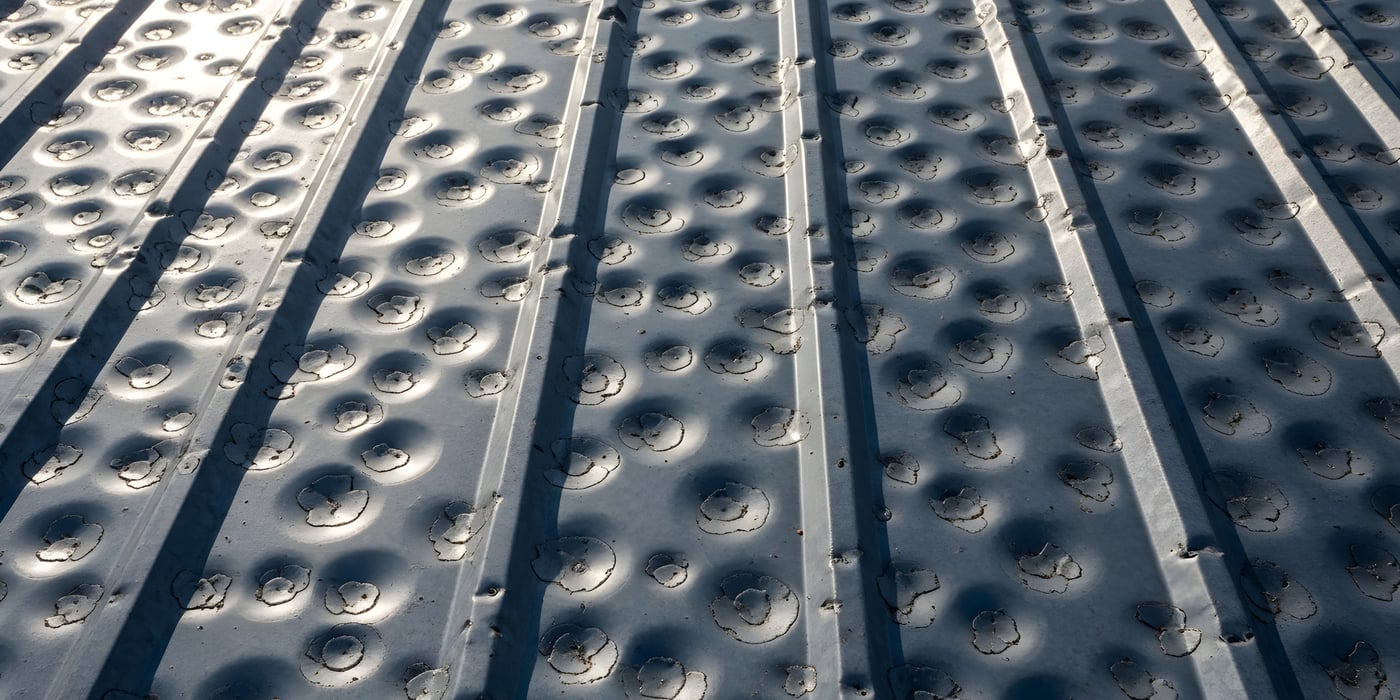
Hail Can Leave a Permanent Impression
A metal roof may continue to shed water after a hailstorm while still showing dents across its surface. These dents can be particularly noticeable on broad, smooth panels and under changing sunlight.
The insurance distinction matters. Some homeowners policies include a cosmetic-damage exclusion for metal roof surfaces. Under such an endorsement, dents that do not impair the roof’s ability to keep water out may not qualify for replacement—even when they materially change the appearance of the home.
BRAVA takes a different approach. Its composite tiles are flexible rather than metallic and carry a Class 4 impact rating, the highest classification under the commonly used UL 2218 impact-resistance test.
No roofing material is hail-proof. Product warranties and homeowners insurance coverage should always be reviewed before making a roofing decision.
Metal Roofs Can Create Significant Heat Buildup
Metal is highly conductive and can reach very high surface temperatures in direct sunlight. Our field reports indicate that heat buildup can be especially noticeable on dark-colored metal roofs, complex roof configurations, and assemblies with limited ventilation, insufficient insulation, or minimal separation between the metal and occupied areas.
That heat may affect more than indoor comfort. Elevated temperatures in roof cavities and enclosed architectural details can increase cooling demands and place additional stress on underlayments, sealants, ventilation components, and rooftop equipment.
Reflective coatings, lighter colors, ventilation, insulation, and a properly designed air space can help reduce these effects. However, they do not change the fact that metal readily absorbs and transfers heat when exposed to intense sunlight.
BRAVA composite tile is not sheet metal and has much lower thermal conductivity. Its individual tile configuration and dimensional profile can also help limit the direct heat transfer associated with broad metal panels.
For homeowners in hot, sunny climates—particularly those with complicated rooflines—thermal performance should be evaluated as part of the complete roof system rather than assumed from general energy-efficiency claims.
Metal Finishes Can Change Over Time
Painted metal roofing relies on a factory-applied surface finish. Premium coatings can perform well for many years, but exposure to sunlight, salt, pollution, and weather can eventually cause fading, chalking, uneven weathering, or visible scratches.
Color matching may also become difficult when a weathered panel must be repaired or replaced years later. Even when the original color remains available, a new panel may contrast with the surrounding aged finish.
BRAVA’s color is integrated throughout the tile rather than applied only as a thin surface layer. Its formulation includes UV protection, while natural-looking color variation helps the roof maintain a rich, dimensional appearance as it ages.
Oil Canning Can Affect the Finished Appearance
Oil canning is the visible waviness that sometimes appears in the flat areas of sheet-metal panels. It does not necessarily indicate that the roof has failed, but it can be distracting—especially on large, highly visible roof planes.
Panel width, metal thickness, substrate alignment, thermal movement, manufacturing, handling, and installation technique can all contribute. Some manufacturers classify oil canning as an aesthetic condition rather than a warrantable defect.
Because BRAVA is formed as individual dimensional tiles, oil canning is not a concern.
Complex Rooflines Demand Exceptional Metalwork
Metal can perform beautifully on a simple roof. On homes with numerous hips, valleys, dormers, turrets, wall transitions, penetrations, and intersecting slopes, however, installation becomes much more dependent on extensive field fabrication and precise detailing.
Every transition must manage water while accommodating the expansion and contraction of the metal. The resulting seams, cuts, flashings, and penetrations place a premium on installer experience and workmanship.
BRAVA’s individual tiles and coordinated accessories are designed to follow detailed roof geometry while preserving the natural appearance of slate, shake, or barrel tile.
Stone-Coated Steel Can Lose Granules
Stone-coated steel combines a metal panel with bonded stone granules. Some loose granules after manufacturing or installation are considered normal. Additional granule loss may occur from foot traffic, hail, storm debris, maintenance, or long-term weathering.
Granule loss does not automatically mean the underlying steel panel has failed, but it can affect color consistency, texture, and appearance.
BRAVA does not use a stone-granule surface, so there is no granular coating to shed.
Rain and Hail May Sound Louder
The sound of rain on a metal roof depends substantially on the complete roof assembly. Solid decking, quality underlayment, attic insulation, and finished ceilings can make metal roofing much quieter than an exposed agricultural panel.
Even so, homeowners who are sensitive to sound should discuss the proposed assembly before installation—particularly when bedrooms or living areas sit directly beneath the roof, when ceilings are vaulted, or when the structure has little or no attic space.
BRAVA provides the substantial profile and architectural character of individual roof tiles without the ringing quality that can accompany exposed sheet metal.
Metal Expands and Contracts
Metal naturally expands and contracts as temperatures change. A properly designed system accommodates that movement, but poor detailing can place stress on fasteners, seams, clips, flashings, sealants, and penetrations.
Exposed-fastener systems deserve particular attention because their fasteners and washers remain part of the roof’s weather barrier. Over time, some systems may require inspection and maintenance for loosened fasteners, backed-out screws, or deteriorated seals.
BRAVA tiles are installed as individual units, avoiding the long-panel thermal movement associated with sheet-metal roofing.
Corrosion Depends on the Environment
Metal roofing products use protective coatings to resist corrosion, but cut edges, scratches, trapped moisture, salt exposure, and contact between incompatible metals can create vulnerable areas.
Material selection and detailing are especially important near the coast and around copper features, pressure-treated lumber, chimneys, HVAC equipment, and runoff from dissimilar materials.
BRAVA’s composite material does not rust or corrode.
Repairs Can Be More Complicated Than Expected
Metal roofing is often described as easy to maintain, but repairs can become complicated when long panels run from the ridge to the eave or interlock with adjacent panels.
Accessing damaged areas may require removing surrounding materials. Replacement panels can also be difficult to match because of discontinued profiles, unavailable finishes, or differences between new and naturally weathered metal.
The individual-tile format of a BRAVA roof can make localized work more manageable, subject to the roof design, installation method, and availability of matching material.
Why Homeowners Choose BRAVA
Authentic Architectural Character
BRAVA recreates the depth, texture, shadow lines, and natural variation of slate, hand-split cedar shake, and traditional Spanish barrel tile. The result complements distinctive architecture without sacrificing modern performance.
Class 4 Impact Resistance
Every BRAVA profile carries a Class 4 impact rating. This does not make the roof indestructible, but it provides a recognized measure of impact resistance for homeowners in hail-prone regions.
Color With Depth
BRAVA tiles are colored throughout, with UV protection incorporated into the formulation. Multicolor blends create the rich, varied appearance of natural roofing materials instead of relying on a single flat surface color.
No Rust, Oil Canning, or Metal Dents
BRAVA does not corrode, cannot develop sheet-metal oil canning, and will not retain hail dents in the manner of a metal panel.
Designed for Demanding Weather
Depending on the selected profile, assembly, and installation method, BRAVA products as a Class A System and tested high-wind assemblies. Applicable ratings require the specified components and installation procedures.
Lightweight Performance
BRAVA delivers the appearance of slate or clay without the extreme weight of those natural materials, making it suitable for many projects where structural reinforcement might otherwise be required.
Long-Term Confidence
BRAVA is backed by a 50 year limited lifetime warranty. Coverage, transferability, remedies, installation requirements, and exclusions should be reviewed as part of every roofing decision.
Is Metal Roofing Ever the Better Choice?
A high-quality metal roof installed by an experienced specialist can be an excellent solution. It may appeal to homeowners who prefer a clean contemporary or agricultural aesthetic, want a highly reflective light-colored finish, or are comfortable with the possibility of cosmetic weathering.
The right comparison is not “good roof versus bad roof.” It is a question of which material best fits the home, climate, architecture, and owner’s priorities.
If those priorities include authentic architectural character, impact resistance without visible metal denting, dimensional color, reduced heat transfer, freedom from corrosion and oil canning, and compatibility with an intricate roofline, BRAVA deserves a closer look.
Compare More Than the Initial Price
A premium roof should be evaluated as a complete system. Before making a decision, compare:
- Actual product samples and completed installations
- Impact ratings and hail-related warranty exclusions
- Finish and fade coverage
- Cosmetic-damage provisions in your insurance policy
- Ventilation, insulation, and expected thermal performance
- Snow-retention requirements
- Repairability and future material availability
- Installer training and experience
- Required maintenance
- Total long-term cost—not simply the initial estimate
Experience the BRAVA Difference
Your roof is both a performance decision and one of the most visible architectural features of your home. BRAVA brings together the character of traditional roofing, the durability of modern composite engineering, and the flexibility to create a roof that feels designed specifically for your property.
Request A Sample
Brava roof tiles are manufactured from recycled materials and can be recycled again if the roof ever has to be replaced, making them sustainable and environmentally friendly. With a 50-year limited lifetime warranty they can be shipped almost anywhere in the world. Contact us today to get your free samples and discover why Brava is the first choice for homeowners around the world.